Searching for a Maths private tutor in Panchkula? Best Home Tuition accepts enquiries about individual Maths teaching for school students, including primary arithmetic and senior-secondary problem solving, subject to suitable tutor availability. This guide focuses on evaluating a tutor’s teaching method, identifying Maths learning gaps and building a realistic plan. It is distinct from a general home-tuition service overview.
Quick answer: Share the student’s class, school board, difficult topics, Panchkula locality and preferred schedule. Ask how the teacher checks independent understanding, not only how many chapters they can cover.
How to choose a Maths private tutor in Panchkula

Choosing a private Maths tutor begins with the student’s specific difficulty, not the promise of quick marks. A child may calculate accurately yet misunderstand word problems, while another understands a concept but makes repeated sign errors. Describe the class, board, topics, preferred timetable and Panchkula locality when enquiring. Ask how a prospective teacher would diagnose gaps rather than immediately prescribe the same worksheet to every learner. For school students, the ability to explain a method in simple words is as important as knowing the final answer.
Parents can compare tutors by current subject experience, communication, patience, regular attendance and willingness to review the student’s actual school books. A teacher familiar with primary arithmetic may not necessarily be the right specialist for advanced Class 12 calculus. If a specific board or entrance examination is involved, mention it early. Best Home Tuition can discuss options subject to a suitable teacher being available; the first step is a realistic academic match.
What should the first Maths lesson assess?

A useful first lesson should reveal what the student can already do without hints. A tutor may ask the learner to explain one recently taught school question, show how they arrived at an answer and attempt a similar problem independently. When an error occurs, the teacher can trace it to a misunderstanding in operations, fractions, algebra or reading instructions. A short diagnostic conversation can be more informative than asking the child to complete a long paper under pressure.
Parents should bring current textbooks, the latest school test and a short list of confusing chapters. The teacher can then recommend a few priority goals for the first month and explain how understanding will be checked. For example, a goal might involve interpreting word problems more accurately rather than merely completing additional sums. This approach encourages a targeted plan and makes later progress reviews more meaningful.
Classes 1 to 3: number sense and early arithmetic

Young learners need a secure understanding of counting, place value, number relationships and basic operations. A private Maths tutor can use small objects, pictures and spoken explanations to show why addition or subtraction works. Multiplication should develop from repeated grouping and patterns before the focus moves entirely to speed. If the child answers from memory without understanding, the teacher can use a different example to check the idea. Short activities often suit primary pupils better than a long uninterrupted worksheet.
Parents may notice improvement when the learner starts estimating whether an answer makes sense, checking a sum or explaining a strategy confidently. A tutor should give age-appropriate practice and patient feedback instead of turning every mistake into a problem. Consistency matters, but tuition should still leave room for school homework, outdoor play, rest and family time. Ask for one small weekly learning target that can be observed at home.
Classes 4 and 5: fractions, decimals and word problems

As Maths becomes more demanding, students need to connect calculations with the meaning of a question. Fractions, decimals, division and measurement can become confusing when earlier place-value ideas are shaky. A tutor can use drawings, everyday quantities and worked examples before asking the learner to solve unfamiliar problems. Reading a word problem carefully is a separate skill: children should identify the given information, understand the question and decide which operation is relevant rather than guess from a keyword.
A simple lesson plan can include a quick review of an earlier topic, one explanation, a guided question and several short independent attempts. Parents can ask whether the student can talk through the reasoning without the teacher finishing each step. This builds the habits needed in middle school. Extra pages of practice are useful only when they address a real gap and the child has enough time to learn from corrections.
Classes 6 to 8: ratios, integers and the start of algebra

Middle-school Maths introduces ratios, integers, algebraic expressions, geometry and more complex calculations. A learner may find equations difficult because the meaning of negative numbers or fractions is not yet secure. A skilled tutor should investigate the earliest missing idea and revisit it before moving forward. When teaching ratio or percentage problems, the tutor can explain the underlying relationship and use a familiar example rather than rely entirely on a memorised formula.
Ask the student to keep a notebook of doubts and record repeated errors. A teacher can use those examples to plan revision rather than assign unrelated work. At the end of a lesson, give one question with changed numbers or wording and ask the learner to explain each step. Independent reasoning is a useful sign that concepts are becoming more secure, even if the pace is slower than originally expected.
Class 9 Maths: building a stronger secondary-school foundation
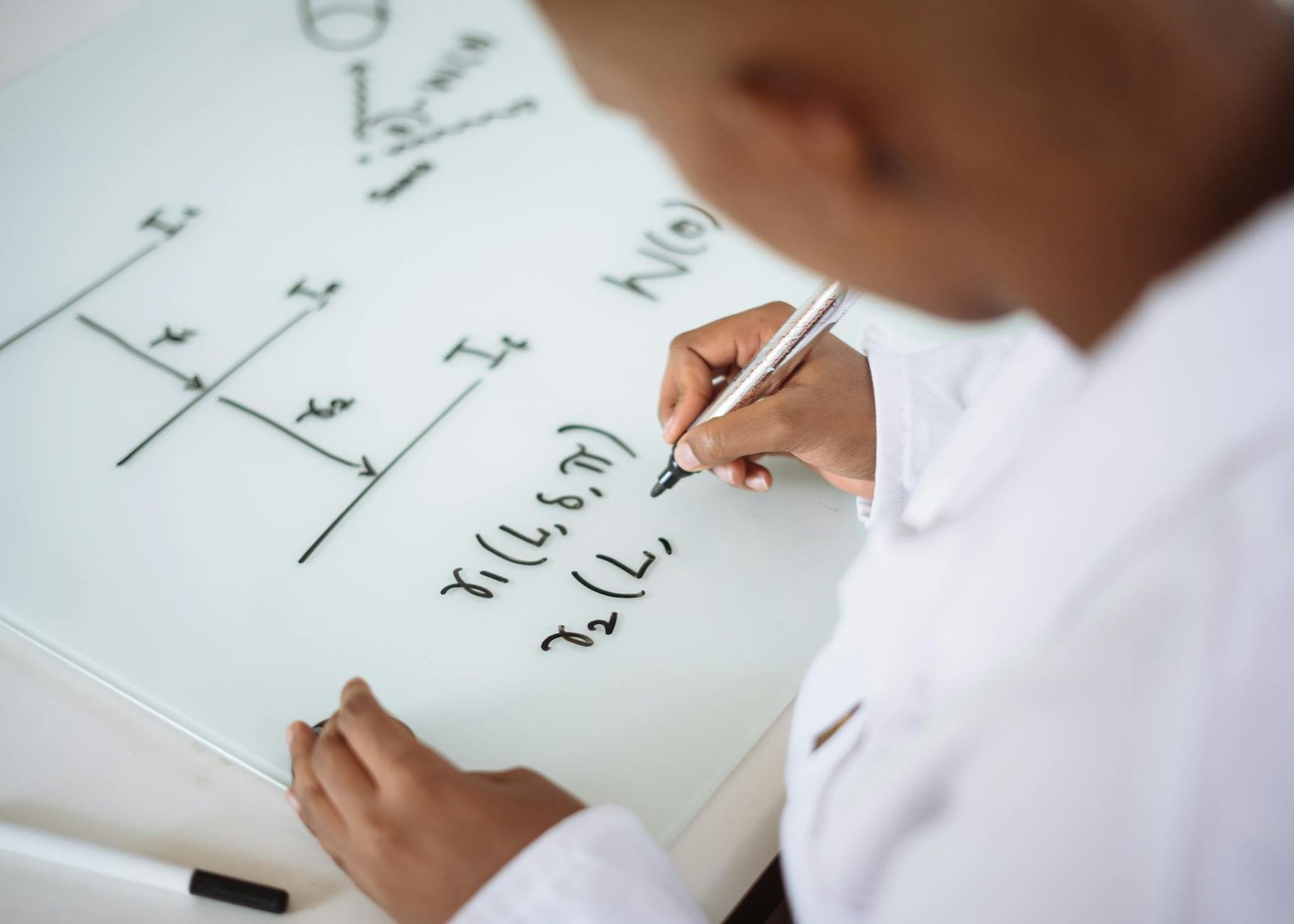
Class 9 can expose gaps in algebra, geometry and number operations that were easier to overlook earlier. A student may recognise a solution when shown but struggle to start an unfamiliar question. An individual tutor can separate the steps: understanding what is known, deciding on an approach, carrying out the calculation and checking whether the result is sensible. Written reasoning matters because small errors early in a problem can affect the rest of the answer.
School test papers often reveal patterns such as incorrect signs, skipped working or misinterpreted diagrams. Instead of correcting only the final answer, the teacher should help the learner identify the exact step that caused the mistake. Regular mixed practice can revisit older concepts while school chapters continue. Families can review progress by comparing new work of similar difficulty after several weeks rather than expecting an instant jump in marks.
Class 10 Maths: prepare with method, practice and review

Class 10 tuition should use the student’s current board syllabus and school assessment guidance. Topics may include algebraic problem solving, geometry, trigonometry and statistics according to the prescribed curriculum. A good tutor can teach when to use a method, how to show a logical sequence of steps and how to check a numerical result. Practice should cover both familiar examples and questions phrased in unfamiliar ways, because merely memorising worked solutions may leave gaps.
For CBSE programmes, families can check the official CBSE Academic website and their school’s instructions for published curriculum and assessment resources. A useful weekly routine includes concept revision, short independent sets and correction of earlier mistakes. Timed exercises can help with pacing once understanding is secure. No teacher can responsibly promise a particular board percentage or rank; ask for realistic milestones.
Class 11 Maths: understanding functions and advanced ideas

Mathematics in Class 11 introduces a greater degree of abstraction, so students need to be comfortable interpreting notation, graphs and relationships. Topics and sequence vary with the curriculum, but foundations in algebra and functions often remain important. A private tutor can explain a concept in several ways, compare a graphical interpretation with symbolic working and check whether a student understands the conditions under which a method is valid. An answer that looks correct is not enough if the reasoning is fragile.
Senior-secondary tuition should include independent practice and revision of prerequisites. If a student cannot manipulate an algebraic expression accurately, jumping to harder exercises may create frustration. Ask the proposed tutor which Class 11 boards they have recently taught and how they would address both current homework and earlier gaps. For entrance-exam goals, discuss the additional requirement separately from regular school support.
Class 12 Maths: calculus and multi-step problem solving
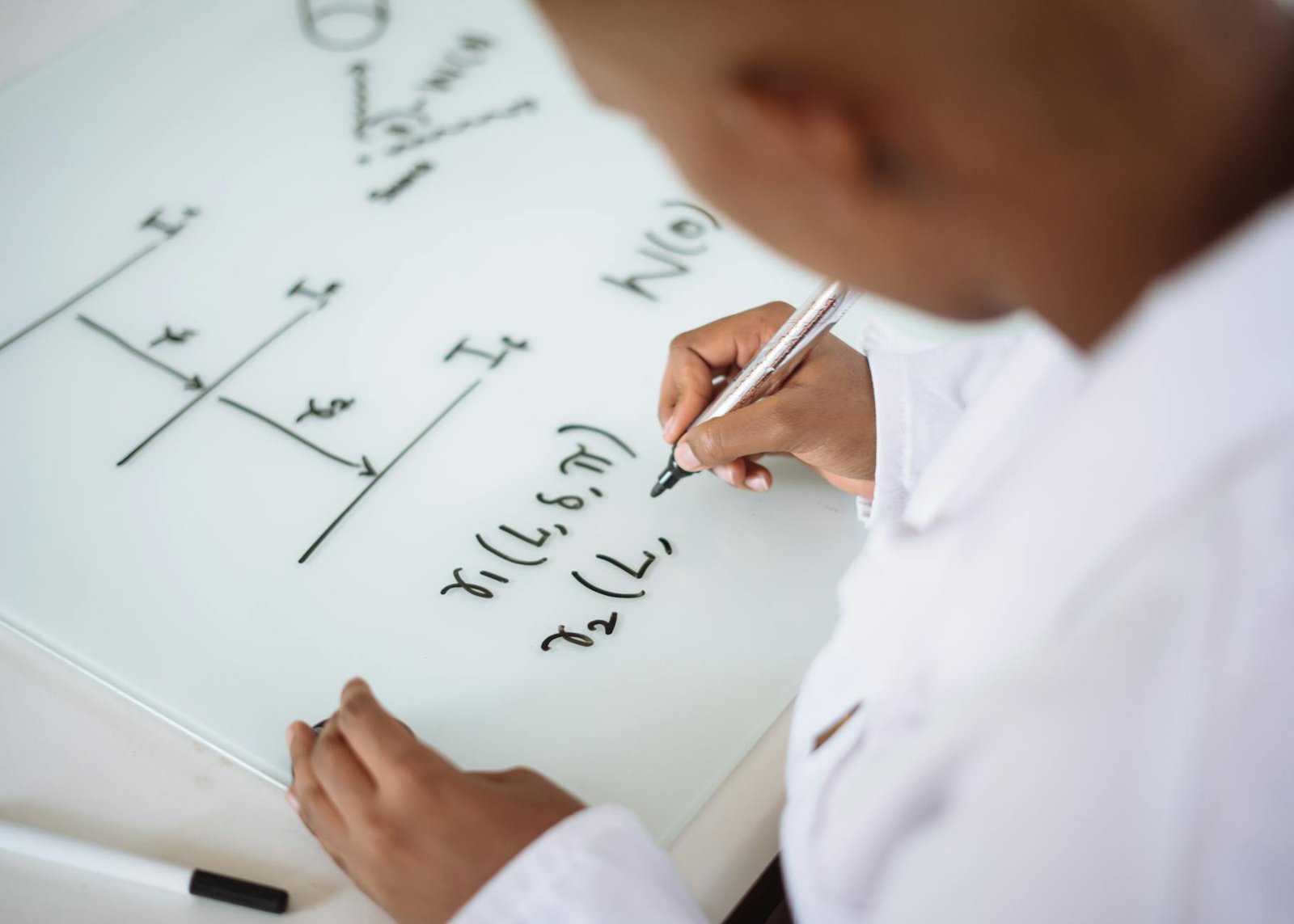
Class 12 students often need to combine earlier ideas in longer problems. Depending on the board, calculus, algebra and related topics can require careful notation and multiple logical steps. A tutor should identify whether mistakes reflect a missing concept, incorrect manipulation, weak recall or difficulty selecting the right approach. Explaining why a step is valid helps the learner develop the confidence to begin new questions instead of depending on a memorised template.
A sensible plan combines schoolwork, varied practice, corrections and spaced revision. Students can mark which questions required hints and try similar examples later without help. Ask how the tutor will review completed work and whether topics will be revisited before assessments. Where JEE preparation is relevant, verify specialist experience with the examination’s current expectations. Extra lessons should complement independent study, not replace it.
Algebra tutoring: from expressions to equations

Algebra becomes easier when the student understands that symbols represent quantities and relationships rather than random letters to manipulate. A teacher can begin with numerical patterns, move to expressions and then explain why the same operation is applied to both sides of an equation. Word problems are a useful test because the learner must translate a situation into mathematical language. If the student makes a mistake, the tutor should identify whether the issue is interpretation, signs or an earlier arithmetic skill.
Practise a few related problems, then change the context to check that the idea transfers. Encourage the learner to describe what each symbol means and test an answer by substitution where appropriate. An error notebook can record repeated misconceptions instead of simply listing incorrect sums. Families can ask for examples of independent work after a month to see whether explanations are leading to stronger reasoning.
Geometry: diagrams, reasoning and construction
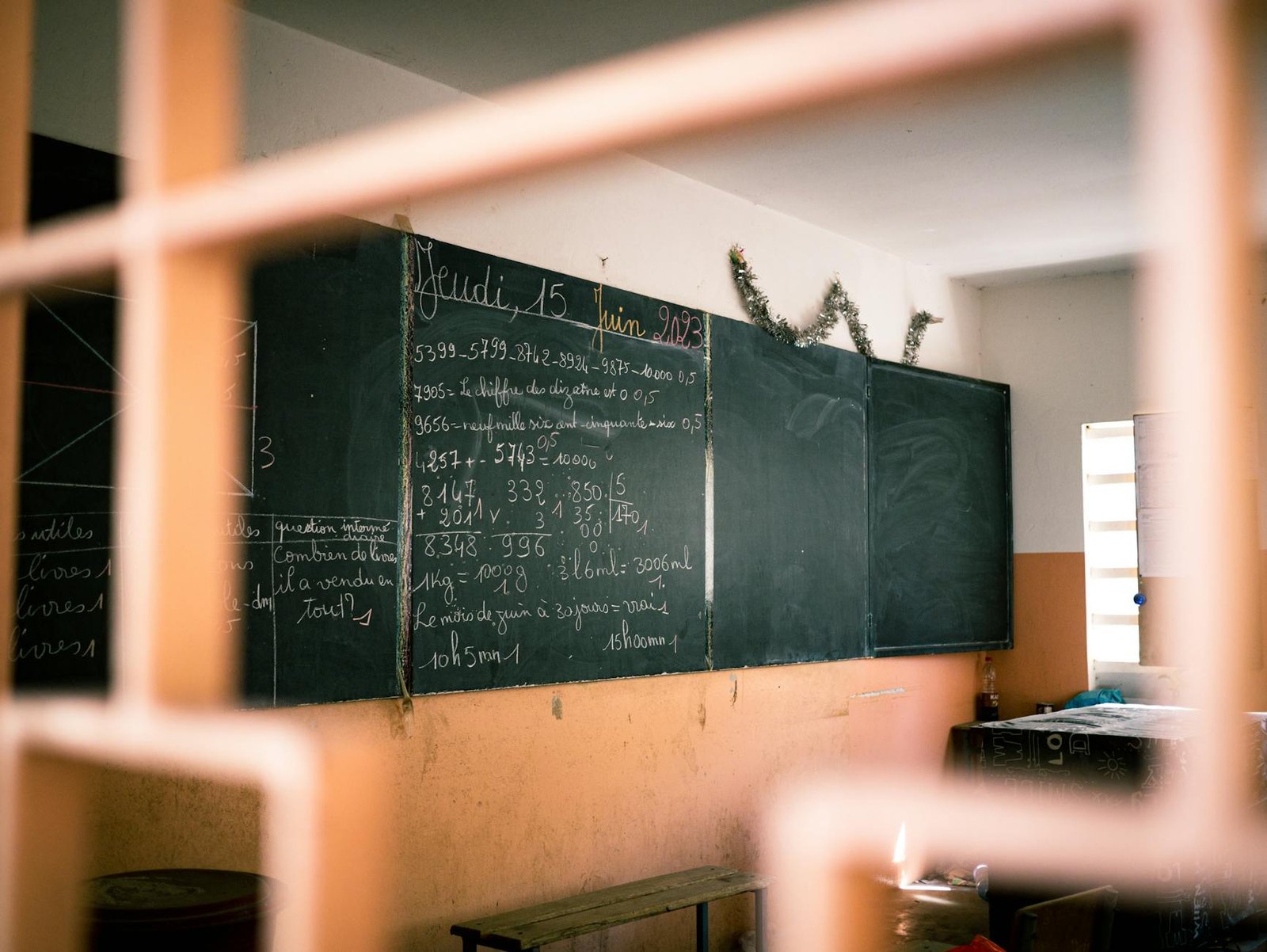
Geometry can be challenging because a diagram makes a relationship visible but does not prove that it is true. A private tutor should help students read the given information, identify relevant properties and explain each step in a solution. Labelling diagrams carefully can prevent confusion. Depending on the class and board, students may need help with angles, triangles, circles or geometric constructions. The teacher should use the syllabus to choose appropriate topics and proof styles.
Ask the student to redraw an example and explain the relationships in their own words. Simply copying a completed proof from the board may not build understanding. A new question that changes the orientation of a figure can reveal whether the learner recognises the same underlying principle. Patient guidance and independent practice may help students who feel overwhelmed by long geometric solutions.
Trigonometry: relate ratios to the problem

Trigonometry requires a student to connect ratios, angles, diagrams and algebraic manipulation. Memorising a list of identities may help recall, but it does not explain when a relationship is useful. A tutor can begin with simple diagrams, the meaning of a ratio and the conditions of a question. Students should practise distinguishing the information given from the quantity being found. Small algebraic errors can be particularly frustrating, so the teacher should check both the trigonometry concept and the manipulation involved.
Ask the learner to explain why a ratio applies and how the result could be checked. Short revision across several lessons can be more effective than memorising everything the evening before a test. Students preparing for board assessments should follow the prescribed question types. Those preparing for competitive examinations should clarify the additional depth and pace required with a suitably experienced tutor.
Statistics and probability: read the question carefully
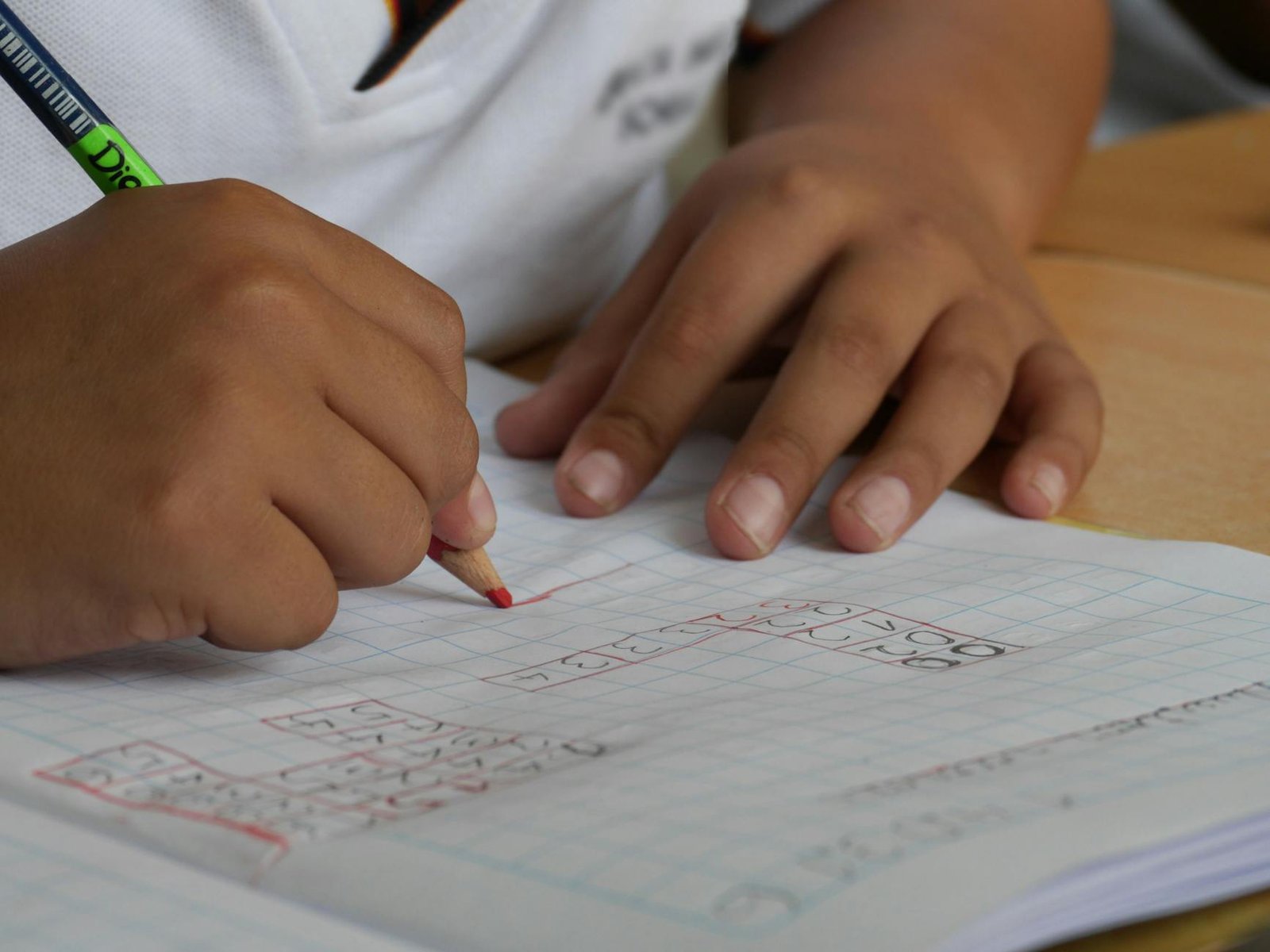
Statistics and probability problems require clear interpretation before calculation. A student might know how to compute an average but misunderstand what the data represent. A tutor can use familiar examples to explain tables, graphs, distributions or simple chance situations at the level required by the board. The learner should read labels, units and question wording carefully rather than begin calculating immediately. Practising a new dataset helps show whether the method can be applied independently.
Parents can ask the tutor to teach a simple checking routine: identify the question, organise the data, choose an appropriate method and explain what the answer means. Errors in interpretation may require a different remedy from calculation mistakes. Short mixed practice can help students become comfortable with unfamiliar examples and avoid relying entirely on remembered worksheets.
One-to-one Maths tuition versus group coaching

Individual tutoring can be useful when a student needs a different pace, repeated explanation or targeted practice on a specific difficulty. Group coaching may provide peer discussion and a regular shared timetable. Neither is automatically the best option for every child. A family should consider the student’s confidence, learning gaps, available schedule and budget. A nearby group class may be convenient, while one-to-one support can allow closer attention to how an individual solves a problem.
Ask about actual lesson structure rather than assuming that private teaching always means better results. A tutor should check understanding and assign appropriate practice without completing every question for the learner. Compare fees and practical travel time, but give equal weight to subject knowledge and reliability. If the student becomes more independent over several weeks, that is a useful indicator that the arrangement may be helping.
Panchkula sectors, MDC and Amravati: tutor availability

A Maths tutor enquiry should include the Panchkula sector or general locality because a teacher’s travel route can affect lesson reliability. Families near MDC, Amravati or Sector 20 may have different after-school scheduling needs. A suitable tutor must have the required class-level expertise and a practical route at the desired time. Best Home Tuition can discuss requests, but a website listing does not confirm that an individual teacher is available for every neighbourhood and hour.
For related local information, families can explore Best Home Tuition in MDC and Amravati Panchkula tuition guidance. Share an approximate locality during an initial enquiry; complete household directions can be discussed privately once a suitable arrangement is under consideration. Tutor experience, punctuality and the student’s comfort should remain priorities.
How to evaluate a Maths tutor in a demonstration

An introductory teaching session is useful when it shows how the tutor responds to an actual difficulty. Give the teacher one school problem that the child could not solve and observe whether they assess prior understanding, provide a clear explanation and invite the student to try a similar question independently. Notice whether the tutor can explain an incorrect answer without embarrassment or impatience. These behaviours are often more informative than a broad claim about years of experience.
Some older Best Home Tuition pages refer to free demonstration sessions. Families should confirm whether a complimentary session is currently offered, how long it lasts and whether any conditions apply to the requested subject and location. Afterward, ask the child what became clearer and whether they felt comfortable asking questions. A single demonstration does not guarantee a long-term match but can inform the decision.
Maths tutor fees, lesson duration and payment questions

Private Maths tuition fees depend on class level, board, specialist experience, number of weekly sessions, duration and travel requirements. A primary arithmetic tutor and a Class 12 advanced Maths specialist may require different arrangements. Ask for a quote based on the actual student and course, rather than relying on an unverified universal price range. Clarify whether the fee covers one subject, whether practice materials are included and how progress feedback will be provided.
Before beginning, discuss payment timing, rescheduling, cancellations and any notice required to discontinue lessons. Keep the agreed details in writing where possible. A high fee is not proof of a strong teaching fit, and the lowest price may not provide good value if sessions are irregular. A practical timetable and a teacher who responds to the student’s needs matter as much as the quoted amount.
Online Maths tutor or in-person private lessons?

Online individual Maths tuition may suit students who can follow a shared digital whiteboard and ask questions comfortably. It can also help when a relevant specialist cannot travel to a particular locality. In-person lessons allow the tutor and student to work directly with handwritten solutions. The most suitable format depends on age, attention, equipment, subject depth and preferences. Neither method guarantees better marks, and both require independent practice and feedback.
For online teaching, check that audio is clear and that the teacher can display full workings, diagrams and corrections. Young learners may benefit from an adult nearby; older students may work more independently. Ask whether the student can submit a handwritten solution for review. Families can consult the online home tutor guide before comparing options.
A four-week Maths learning plan that parents can review

During week one, review current schoolwork and identify two or three measurable goals. These might include reducing sign errors, applying fractions to word problems or explaining a geometric proof more clearly. Record a few answers completed independently to establish a baseline. In week two, use guided explanation followed by new questions that target the specific weakness. Week three should revisit earlier concepts and check whether the student can apply them when the numbers or wording change.
At the end of week four, compare work of similar difficulty and ask the learner to explain the reasoning without prompts. Progress may be visible in fewer repeated errors, better confidence or more independent attempts before it appears in school marks. If an approach is not working, discuss a change in pace or the need for more foundational practice. The aim is learning that lasts beyond the next tuition session.
FAQs and how to contact Best Home Tuition for Maths

Can I request a Maths tutor for Class 8, 10 or 12? Yes, share the exact grade and board so suitable expertise can be checked. Does a Maths tutor also teach Physics? Some teachers may have both skills, but do not assume it; confirm subject experience. Do tutors travel to MDC? Share the locality and time so travel can be assessed. Is JEE preparation included? Ask specifically about competitive-exam experience. Is a free demo guaranteed? Confirm current conditions directly.
What should parents send first? Class, board, difficult Maths chapters, general location and preferred teaching time. Can lessons be online? Ask about a suitable one-to-one option. Will marks improve immediately? There is no guaranteed timetable. Compare independent work across several weeks. To enquire, contact Best Home Tuition on 8872339669. Ask about teacher availability, fees, the teaching approach and how progress will be reviewed before committing.
BEST HOME TUITION – MATHS IN PANCHKULA
Ask about a suitable Maths private tutor. Tell us class, board, difficult chapters, sector and preferred teaching time.
Call 8872339669
Call Best Home Tuition WhatsApp Your Requirement
Teacher availability, fees and demo arrangements are subject to confirmation.
