Physics private tuition in Panchkula helps school students study concepts, numericals, diagrams and written explanations through one-to-one learning. Best Home Tuition accepts enquiries for Physics support where an appropriate tutor and timetable are available. This is a practical subject-learning guide covering Class 9–12 needs, worked examples and progress checks, not a list of unverified tutors or guaranteed examination results.
Quick answer: State the student’s class, board, Physics topics, Panchkula locality and preferred teaching time. Ask how the tutor will assess understanding, practise new problems, and review mistakes before deciding.
What should Physics private tuition in Panchkula help a student achieve?
Physics becomes more manageable when students understand a physical situation before selecting a formula. Private tuition can provide time to slow down, ask why a principle applies and examine mistakes in written solutions. Families enquiring in Panchkula may need foundational school Science support, Class 11 concept clarification, Class 12 numerical revision or specialised entrance-exam practice. These are different goals and should be described clearly before a timetable is agreed. Good teaching should make the learner more independent rather than reliant on watching the tutor complete every question.
A suitable first discussion identifies the class, board, current syllabus, difficult topics and preferred time. The tutor can review a recent test to distinguish missing concepts from calculation, unit or reading errors. Best Home Tuition can discuss available options, but teacher assignment and fees require confirmation. This guide focuses on a practical Physics learning process; the related Physics private tutor selection guide covers how families can compare prospective teachers.
How a diagnostic Physics lesson identifies the real difficulty

An initial Physics lesson need not begin with an intimidating test. The teacher can choose two questions from the child’s current chapter and ask the learner to describe what is happening in ordinary language. A student who remembers a formula may not know which quantities it represents. Another may understand the principle but lose marks because they convert units incorrectly. Short questions and discussion make these different difficulties visible before the tutor decides what to teach next.
Parents can provide the current school book, a recent assessment and a notebook of confusing problems. The tutor should explain what the student already knows, which prerequisite needs revision and how progress will be checked. A sensible first-month goal might be identifying given quantities correctly or explaining a force diagram rather than aiming immediately for a promised score. Giving the learner time to think and attempt a problem alone provides more useful evidence than a stack of copied notes.
Class 8 to 10 Physics foundations inside school Science

For middle and secondary classes, Physics topics often sit within a broader Science course. Students may need support understanding force, motion, sound, light, electricity and everyday examples, depending on their board’s current syllabus. A teacher should follow the actual school chapter sequence instead of assuming every child studies the same material in the same order. Diagrams and small numerical questions can be used to explain what is happening, not simply to decorate notes.
A good lesson can begin with an observation, introduce the scientific idea and then ask students to apply it to a fresh example. If a child struggles with a calculation, the teacher should check arithmetic and proportional reasoning as well as the Physics principle. Written answers also deserve attention: the learner should use accurate terms, clear explanations and correct units. Parents can track progress by asking the child to explain a concept independently at the end of each week.
Class 11 Physics: moving from definitions to mathematical models

Class 11 Physics often requires students to connect diagrams, measurements, graphs and algebra. When a chapter introduces a principle, the tutor can ask what assumptions are being made and whether the equation applies to the particular situation. Learners who memorise a worked solution without understanding these conditions may struggle when a question changes the context. Taking time to interpret a physical model can improve accuracy as well as confidence.
The precise topics and depth depend on the current school board. A student may need revision in vectors, units or mathematical manipulation before more advanced problems become accessible. Tutors should use prescribed materials and review the student’s actual assessments. After an explanation, the learner can attempt another problem independently and compare reasoning with the teacher. This approach tests understanding rather than merely showing that a similar example was completed in class.
Class 12 Physics: combine concepts, numericals and written explanation

Class 12 students may face questions involving electricity, magnetism, optics, modern Physics and other topics depending on the prescribed syllabus. A productive tuition plan combines conceptual explanation with numerical working, diagrams and clear short answers. A tutor can use recent school tests to identify repeated errors: selecting an inappropriate formula, missing a conversion, drawing an unclear diagram or skipping an explanation. Each type of mistake calls for a different correction.
Revision should not involve only the newest chapter. Older ideas often return in later questions, and a student benefits from mixing familiar and unfamiliar problems over several weeks. Ask the learner to explain why a solution works instead of reading a memorised answer. Families preparing for board examinations should follow current school assessment guidance and confirm the tutor’s experience with the relevant course. Tuition can strengthen preparation, but it cannot guarantee an examination score.
A worked example: acceleration from change in velocity
Suppose a vehicle’s velocity increases from 2 metres per second to 12 metres per second in 5 seconds, with uniform acceleration. The change in velocity is 12 − 2 = 10 metres per second. Average acceleration is the change in velocity divided by the time interval, so a = (12 − 2) / 5 = 2 metres per second squared. A tutor should ask the student to identify the initial and final velocities and check that the units of the answer make sense.
After working through this example, the learner could solve another question in which velocity decreases and explain why the acceleration is negative under the chosen direction convention. The purpose is not to memorise the numbers but to understand how a relationship is used. Sketching a simple velocity-time graph can reinforce the idea. A teacher can also check whether subtraction and division errors are hiding a deeper misunderstanding of the Physics.
Mechanics: forces, motion and problem diagrams

Mechanics becomes easier when students can describe the objects and forces involved before writing equations. A tutor might use a free-body diagram to identify which forces act and what direction they have. The learner should distinguish between a force and the motion that may result from several forces. Simply attaching a formula to every question can lead to confusion, especially when an object is in equilibrium or the movement is changing.
Short, varied practice can begin with simple cases and move toward more complicated examples when understanding improves. Encourage the student to label diagrams, state assumptions and check whether the result is physically plausible. When mistakes recur, the tutor can revisit vectors, basic algebra or the interpretation of a diagram. These are often more effective remedies than assigning another large set of questions using the same unclear method.
Electricity: an Ohm’s law example with correct units
Students learning introductory circuits should connect voltage, current and resistance with the conditions in which a relationship applies. For a resistor that obeys Ohm’s law, suppose the potential difference is 12 volts and the resistance is 6 ohms. The current is I = V / R = 12 / 6 = 2 amperes. A good tutor asks the learner to identify the quantities, write the relation, check the units and explain whether the given situation satisfies the assumptions of the formula.
Next, the teacher can change the resistance and ask the student to predict how the current would change if voltage stays constant. Students should also understand that real electrical components do not all behave as ideal ohmic resistors. Use textbook diagrams and safe educational materials for such teaching. Household wiring and electrical equipment should not be used as improvised home experiments; practical activities require appropriate supervision and school-approved methods.
Heat, temperature and thermodynamics: organise the ideas

Some Physics topics are difficult because familiar words have precise scientific meanings. Heat, temperature and internal energy are related, but not interchangeable. A tutor can ask students to describe an everyday example, then show how the textbook distinguishes these ideas. Diagrams and structured comparisons can help prevent the learner from memorising an inaccurate definition. For advanced classes, mathematical treatment should follow the actual course level rather than jump ahead.
Ask the student to explain what happens in a conceptual situation before attempting any calculation. Later, practise using units and interpreting the result. A misconception notebook can capture distinctions the learner repeatedly confuses. When teaching a scientific idea with experiments, rely on supervised school demonstrations or safe educational media rather than suggesting dangerous heat sources or improvised equipment in a private home.
Waves and sound: link graphs to physical observations
Wave questions can combine visual patterns, time intervals and mathematical relationships. A student may need to understand the difference between frequency and amplitude before being asked to perform calculations. A tutor can begin with diagrams and examples suitable for the student’s curriculum, explaining which features represent repeating motion and how the graph should be read. Students should learn to interpret axes and units instead of merely choosing a remembered formula.
Short questions that alter a graph or description can reveal whether the child understands the phenomenon. If an answer is wrong, ask whether the problem came from reading the diagram, recalling a definition or doing the arithmetic. Revision should revisit these distinctions. Connecting an observation with a written explanation and an appropriate graph can strengthen understanding across Physics chapters.
Light and optics: draw and interpret ray diagrams

Optics often becomes much easier when a learner can make a careful ray diagram and explain what each line represents. Before using a formula, a tutor can ask which kind of mirror or lens is involved and what information is provided. For advanced problems, attention to sign conventions and units is important. The appropriate treatment depends on the student’s syllabus, so a teacher should follow the school book and current examination expectations.
Students should practise diagrams independently and then check the labels, directions and reasoning. Changing the position of an object or using a different example can test whether the student understands the underlying rule. A clear diagram often reveals an error before any calculation begins. The teacher should encourage thoughtful checking rather than requiring the learner to memorise a finished picture from a guidebook.
Modern Physics and semiconductors: prepare through understanding

Modern Physics topics can involve unfamiliar scientific language and models. A tutor can begin by connecting the textbook’s definitions to the problem being asked, explaining what each symbol represents and which assumptions apply. Depending on the student’s current board, topics may include atomic models, nuclear ideas or semiconductor principles. It is important not to assume that every syllabus covers all topics to the same depth.
Ask students to explain a diagram or concept in their own words before beginning multiple-choice or numerical questions. Where a calculation is required, write the known quantities and check units carefully. A teacher should distinguish a simplified school model from broader physical theory when that matters to an answer. Revision can mix short conceptual questions with longer work so learners develop both accurate recall and the ability to apply ideas.
Physics for CBSE, ICSE and international school boards
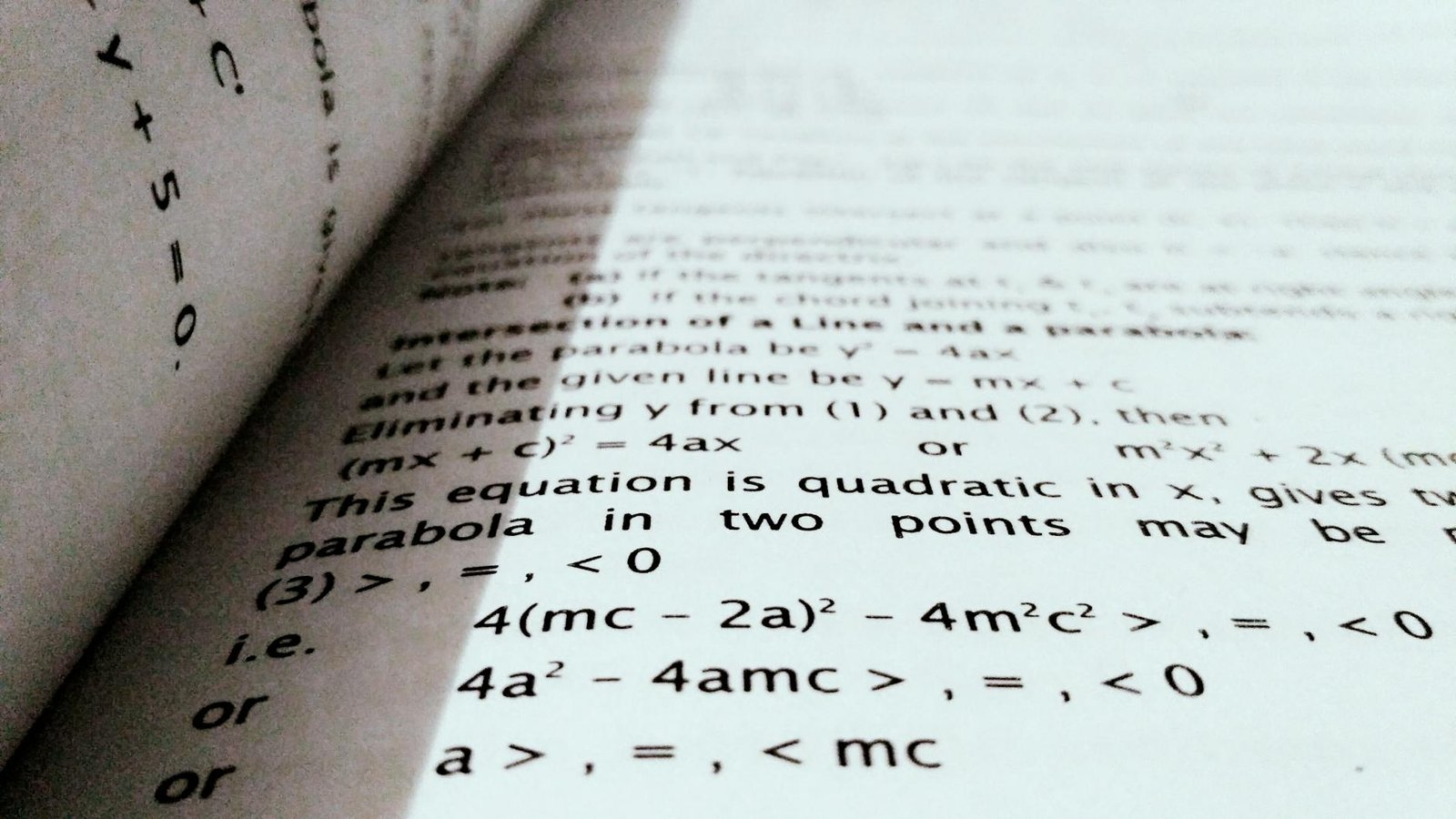
Board-specific experience matters because textbooks, topic sequence and assessment styles may differ. CBSE, ICSE, IB and Cambridge students should share their grade, syllabus and current school books before confirming tuition. A teacher who understands general Physics still needs to know how that course expects a student to demonstrate understanding. Different boards may emphasise extended explanations, conceptual applications or structured numerical answers in different ways.
Families following CBSE can consult the official CBSE Academic website and NCERT educational resources where appropriate. Students from other boards should rely on their school and the relevant official curriculum materials. A proposed tutor should be able to explain how lessons will use these sources. Avoid generic promises that the same worksheets or notes will fit every examination.
Physics preparation for JEE and NEET: keep goals separate
School board Physics and engineering or medical entrance preparation share many concepts, but the expected question formats and revision pace may differ. If a student wants JEE preparation, parents should ask whether the tutor has relevant Maths-linked Physics problem-solving experience and knows the examination requirements. For NEET, Physics involves its own relevant question and calculation skills. A family should state the exact entrance examination and confirm specialised teaching experience rather than assume that every school Physics tutor offers it.
A sensible study plan must account for the student’s present level, school schedule and time for independent practice. A tutor may use a concept lesson, targeted questions, correction of reasoning and later timed practice, but the order should respond to real learning needs. Results depend on many factors and cannot be guaranteed. Ask for evidence of a clear teaching method and practical feedback rather than promises of a rank or admission.
How to correct common Physics numerical mistakes

Physics numericals can go wrong even when the student recalls the relevant formula. Errors may begin with reading the question, identifying quantities, converting units, selecting a sign convention or manipulating an equation. A tutor can encourage a consistent routine: write what is given, state what must be found, choose an appropriate principle, substitute values with units and check whether the answer is sensible. This makes mistakes easier to find.
An error log can group repeated difficulties by cause instead of merely listing incorrect answers. For example, a learner who repeatedly turns centimetres into metres incorrectly needs a unit-conversion review, while another who chooses the wrong equation may need more concept explanation. Give a similar but unfamiliar question after the correction and ask the student to attempt it alone. Independent success is a better indicator of understanding than copying a model solution.
A weekly Physics tuition plan with revision and tests

A weekly plan works best when it aligns with current school lessons and identifies a small number of priority skills. One session may explain a difficult concept, another may apply it through numericals, and a later review can revisit errors and older topics. A student does not always need a formal test at every visit. Short independent questions often provide enough information to decide whether the teacher should move ahead or reinforce an earlier idea.
Families can agree on realistic practice between classes and review it at a consistent time. The tutor should record recurring mistakes and explain what the learner now understands. If school assessments are approaching, the balance between new topics and revision may change. Avoid overloading a child with tuition hours that leave no time to practise independently, complete other subjects or rest. Consistency and focused feedback often matter more than the sheer quantity of exercises.
How to organise Physics tuition around Panchkula localities

Parents may enquire about visiting Physics tuition in Panchkula’s numbered sectors, MDC, Amravati or nearby residential communities. A prospective specialist must have both suitable teaching experience and a realistic travel route for the requested lesson time. Evening traffic and other appointments can affect punctuality. Share the sector or general neighbourhood and a practical time range first; a full residential address need not be posted publicly.
Families can consult our Panchkula home tutor information and MDC Panchkula guide for related local questions. Neither page confirms live availability in every location. Ask directly whether a Physics specialist can travel reliably, how many lessons are possible and whether individual online teaching might be a suitable alternative if travel is difficult.
Online Physics tuition: explaining calculations on a screen

Individual online Physics can work well when the teacher can write solutions step by step and students can ask questions freely. A digital whiteboard or tablet may help explain formulas and diagrams, while clear audio is essential for discussing ideas. Before committing, test whether the student can read the shared workings and submit their own attempts for correction. The format should support learning, not merely deliver a lecture while the child watches passively.
In-person lessons can offer direct discussion over school notebooks and handwritten problems, but the better choice depends on the student’s age, concentration, subject depth and internet reliability. Younger learners may require an adult nearby for online sessions. Our online home tuition guide covers further practical questions. The format should be reviewed if the student repeatedly finds it difficult to follow explanations or show their work.
Physics private tuition fees and scheduling questions

Fees for private Physics tuition may vary with class, board, specialist expertise, lesson length, frequency and travel. A Class 9 foundational session is not directly comparable to Class 12 or entrance-exam preparation. It would be misleading to publish a universal fee range without a current quote based on the actual student. Ask what is included: one subject or several, preparation material, independent exercises, review of mistakes and how parents receive progress feedback.
Discuss payment timing, missed lessons, rescheduling and any notice required to stop tuition before agreeing to regular sessions. A consistent timetable that leaves time for schoolwork and rest is more valuable than an overpacked arrangement. The cheapest option is not necessarily the best if teaching is unreliable, and a higher fee does not prove better instruction. Subject fit and clarity about the terms should guide the decision.
Frequently asked Physics tuition questions and enquiry details

Can Classes 9–12 request Physics tuition? Families can enquire for appropriate school levels, subject to a suitable specialist being available. Will a tutor teach JEE or NEET Physics? That requires separate confirmation of examination-specific experience. Can a teacher visit MDC or Amravati? Share the general locality and preferred time so travel feasibility can be checked. Is there a guaranteed free demo? Ask directly about the current offer and conditions. Are all tutors available online? Availability depends on the individual teacher and required subject.
What should be sent in the first message? Class, board, current Physics chapter, locality and preferred time. How soon will marks improve? There is no guaranteed timetable; compare independent work over several weeks. What if a student struggles with Maths? Ask the tutor to review the numerical skills needed for the Physics chapter. Contact Best Home Tuition on 8872339669 to discuss teaching options, fees and lesson structure before committing.
BEST HOME TUITION — PHYSICS IN PANCHKULA
Looking for individual Physics tuition? Share the student’s class, board, topics, sector and preferred time.
Call 8872339669
Call Best Home TuitionWhatsApp Tuition Enquiry
Subject specialist, availability, fees and demo terms require confirmation.
