Class 10 Life Processes Biology Home Tuition

class 10 life processes home tuition is a subject-specific guide to learning life processes through individual teaching, practical examples and independent revision. This article helps parents compare tutoring approaches for Class 10 while setting realistic expectations about schoolwork, feedback and teacher selection. Best Home Tuition accepts enquiries subject to actual availability.
Quick answer: Check the current school syllabus, diagnose the prerequisite gap, use a labelled worked example, review the student’s independent answer and repeat the check after two weeks. An effective lesson should help the learner explain the idea without being prompted through every line.
A useful class 10 life processes home tuition learning plan
Individual tuition is most useful when the teacher understands why a particular chapter is difficult. For life processes, one student may know the definitions but struggle with application; another may answer familiar questions without recognising the same principle in a new diagram. Ask the learner to explain a previous school problem before deciding what to teach next. The first lesson should identify a concrete gap rather than repeat every page of the chapter.
A parent looking for class 10 life processes home tuition should ask which skills the tutor intends to check during the first week. Useful goals include explaining a relevant diagram, interpreting textbook language and solving a fresh question without prompts. The teacher must follow the actual school board and avoid offering guaranteed marks. The student’s independent explanation is more informative than a claim that the whole topic has been covered.
School syllabus and official study materials for Class 10

School instructions determine the depth, chapter order and style of response expected. Begin with the current textbook and ask the learner to identify questions that feel difficult. Families following CBSE can consult CBSE Academic and the NCERT website for official resources. Students in other boards should check the appropriate official sources rather than rely on an old syllabus circulating on social media.
Create a small checklist showing the chapter’s main concepts, diagrams, relevant vocabulary and the work already assigned by school. For life processes, split explanation from written practice so a learner who understands the idea but struggles with answer presentation receives the right help. The tutor should be able to explain how each chosen activity relates to the present course without claiming that every available question is examination content.
Foundations to review before starting life processes

A common cause of difficulty is an earlier gap in cells, tissues, organs and life functions. The tutor can check this through one short question, a simple explanation and a labelled representation. If the student hesitates, slow the lesson and teach the missing prerequisite. Working at a higher level while ignoring the foundation can encourage memorisation without understanding. The objective is to rebuild the relevant step, not to label the child as weak in the whole subject.
Ask the student to use an everyday explanation first and then convert it into the terminology required by the board. This reveals which ideas are understood and where scientific language needs improvement. An attentive tutor should check whether the learner can repeat the explanation in a new context. Parents can request a brief note identifying the prerequisite skill, the example used and how the teacher will return to the main chapter.
First-session diagnostic for life processes

A concise diagnostic is preferable to a long intimidating test. Use one familiar question from the school notebook, one interpretation question and one unfamiliar application. For this topic, the teacher might ask the student to create a flowchart of a syllabus-specific process. Record whether the learner could begin without help, which labels or terms were used correctly and exactly where the explanation stopped making sense. A wrong answer is evidence for instruction, not a reason for criticism.
The tutor can then use the same core idea in another format to distinguish a genuine misconception from unfamiliar wording. Save the original attempt as a baseline for later comparison. Do not compare the learner with classmates or promise a fixed number of sessions for complete mastery. A helpful first-week plan states the skill to improve, what independent practice will look like and when another check will take place.
Worked example: create a flowchart of a syllabus-specific process

Begin by asking the student what the task requires and which parts of the question contain useful information. An illustrative exercise is to create a flowchart of a syllabus-specific process. The teacher can model the first part while explaining why each label, definition or process is relevant. The learner should participate by predicting the next step instead of copying the complete answer. Avoid adding specialist detail beyond the current school syllabus when an introductory explanation is sufficient.
After the worked explanation, change one element in the diagram or wording and ask the student to respond independently. This gives a clearer picture of understanding than a perfect copy of the board. Use a short comparison between the original question and the new version, and include one checking question. The learner should explain the central idea in their own words before moving to the next topic.
Second worked example: explain the sequence and location of one biological pathway

A second example should genuinely test transfer rather than change only a name or number. Here the learner can explain the sequence and location of one biological pathway. Ask what is similar to the first task and which assumptions are different. The tutor can offer a hint after a reasonable attempt, but should still keep a written record of where help was needed. The objective is to make the reasoning visible, especially when the student can memorise a textbook paragraph but cannot interpret a related question.
Compare the two answers in a table listing the question’s demand, the required knowledge, the representation chosen and how the answer was checked. A short explanation of differences often exposes a gap more clearly than twenty nearly identical worksheets. Allow time to correct the learner’s own written response. A good final question asks why the conclusion follows from the supplied information instead of asking only for a memorised label.
Understand the recurring error: mixing up inputs, outputs and the order of stages

One important misconception in life processes is mixing up inputs, outputs and the order of stages. Simply telling students the correct answer may not stop the mistake returning. Ask them to locate the first unsupported step in a written solution, sketch or explanation. The teacher should then show a corrected method using the same underlying concept and follow it with a different application. A small error notebook can record the original thinking, the correction and the new question.
When reviewing the notebook several days later, ask the learner to explain the corrected idea without reading it aloud from the page. A persistent error may require revisiting cells, tissues, organs and life functions rather than giving the student harder material. Parents can check whether recurring mistakes are decreasing, but should focus on specific skills rather than treating the child as a score. Good feedback tells the student what to do differently next time.
Build an accurate diagram for life processes

For this chapter, a useful representation is a flowchart showing inputs, outputs and stages. A tutor can begin with an accurate textbook-style version and clearly identify what each arrow, label, process or symbol means. The visual should be connected to the question and the board’s expected level of detail. Ask the child to explain why two components are connected rather than simply copying how a diagram looks.
Next, provide a partially completed representation and ask the learner to add missing labels or describe the relationship it shows. Check whether the student can translate the diagram into a short written answer. Simplified models can be helpful but have limits, so the teacher should explain those limits rather than implying every illustration is a complete representation of reality. This is a valuable habit for biology and chemistry learning.
A 50–60 minute individual Biology lesson

A focused lesson can start with a five-minute recall of the last misconception, then move into a clear explanation, a guided example and an independent task. The final minutes can check understanding and plan one manageable activity before the next meeting. These timings are illustrations rather than fixed requirements. Students with different concentration levels or complex school assignments may need shorter segments or a different order.
For life processes, the lesson should include time for the student to describe a flowchart showing inputs, outputs and stages. A tutor who explains continuously without allowing independent answers may not notice that the learner has stopped following. Encourage questions and make feedback constructive. Parents should ask what the child can now explain without prompting and which problem still needs another attempt. This makes the next visit easier to plan.
Reasoning aloud and respectful correction

Students sometimes hesitate to speak when they think every answer must be perfect. A tutor can ask neutral questions such as what is given, what do you notice and which idea might help. For life processes, listen for the reasoning behind the chosen definition or diagram. If the learner makes an error, guide them to inspect one step rather than interrupting with the complete solution. Wait time can improve the quality of an explanation.
Once the learner has responded, ask them to write a short account in their own words. This distinguishes actual understanding from agreement with the teacher. A respectful learning environment is particularly valuable when a student has previously been discouraged by mistakes. Parents can evaluate whether the tutor remains patient and adjusts the method instead of repeating the same explanation more loudly.
A seven-day revision routine for Class 10

On the first day, explain one core idea and work through an example together. On the next day, the learner should attempt a similar question alone. In the middle of the week, vary the diagram or wording and revisit one earlier error. Toward the weekend, combine a question on the prerequisite with a fresh question on the topic. This schedule is illustrative; family commitments and school tests may require a different frequency.
The independent challenge for this unit is to use the process diagram to explain a changed condition. Keep a brief record of whether the student succeeded without help or needed a prompt. If understanding remains limited, simplify the next task instead of adding more pages. A manageable, repeated exercise with feedback is often more informative than a large packet completed without review. Adequate sleep and time for other subjects should remain part of the plan.
Make independent practice more informative

After demonstrating a method, the tutor should provide a fresh problem and ask the student to plan an answer before receiving hints. Mark the amount of help needed and compare with an earlier attempt. The student may initially make small vocabulary mistakes or omit a link in an explanation, but the teacher can distinguish these from a fundamental misunderstanding. Independent practice is the clearest way to find out whether a lesson has transferred.
For life processes, progress includes being able to use the process diagram to explain a changed condition. Ask the learner to describe one way the new task differs from the guided example. Avoid using identical questions in the progress check, since memorised wording could hide a gap. The goal is not to end tutoring abruptly; it is to help the child become less reliant on step-by-step prompts.
Homework and a correction notebook

A useful practice task may include a short definition, a labelled representation and one explanatory question. Assign only as much as the student can reasonably complete around schoolwork and family routines. A large homework set can create the impression of rigour without providing any meaningful information if the tutor never reviews it. Encourage the learner to mark uncertain steps so that questions can be addressed efficiently.
During the next lesson, review one genuine mistake and ask the child to correct it. Record what the misunderstanding was, how it was repaired and whether it has returned. For this subject, note whether the student still shows mixing up inputs, outputs and the order of stages. The correction notebook should remain concise and be written in the student’s own language. Parents can encourage a routine but should avoid completing the assignment on the learner’s behalf.
How to track two-week academic progress

Choose two measurable goals: one prerequisite skill and one application of the main concept. Save a baseline attempt and compare it with a new question testing the same skill about two weeks later. Look for clearer labels, more accurate explanations and less dependence on hints. A score from a few questions should not be described as a scientifically precise improvement percentage. What matters is observable work.
A small progress table can record the date, skill, amount of assistance needed and next action. If the child continues to make mixing up inputs, outputs and the order of stages, revisit the relevant background idea or choose a different representation. If the student handles explain the sequence and location of one biological pathway independently, introduce a modest new challenge within the prescribed course. Parents should receive specific examples of progress rather than a vague promise that marks are guaranteed to rise.
Prepare for school tests without cramming
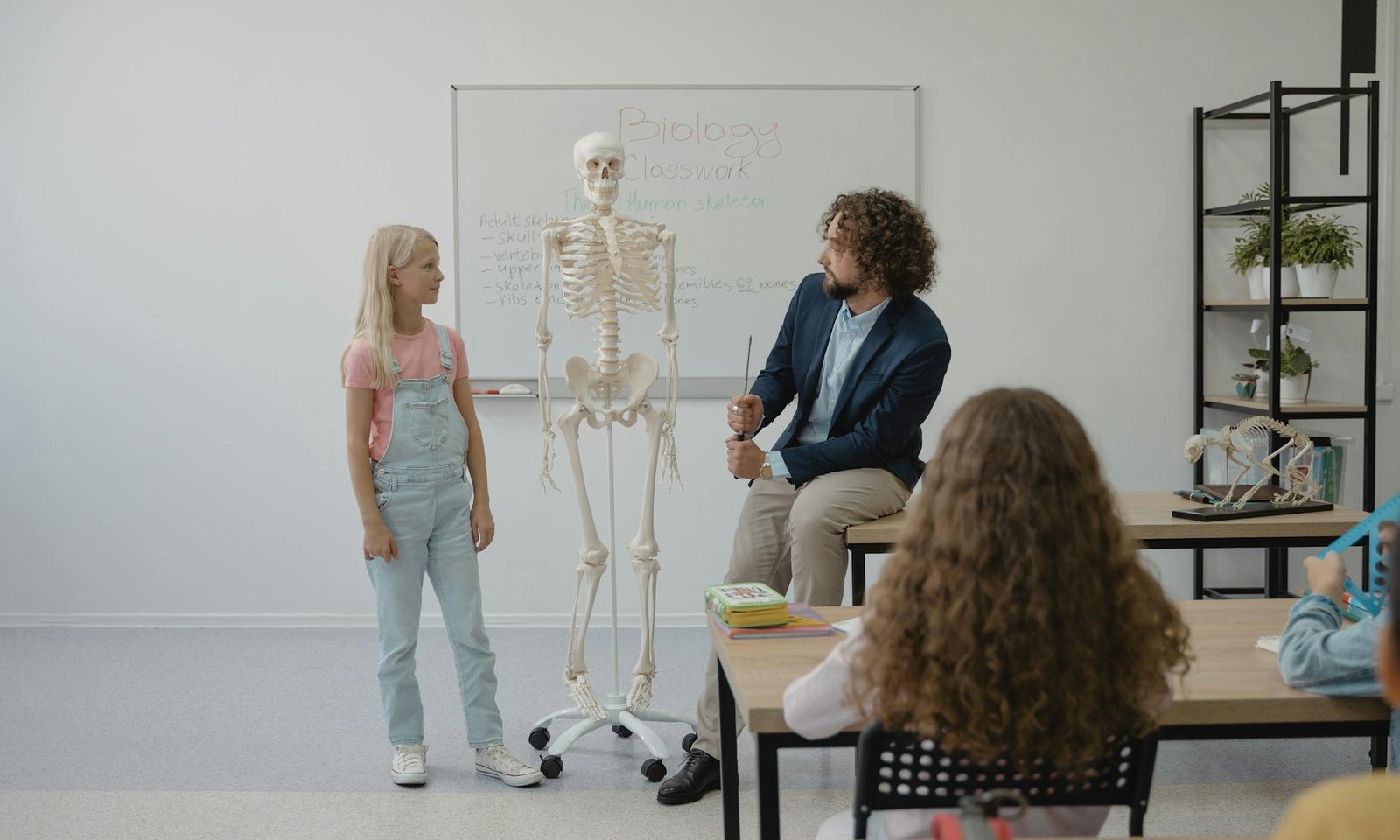
School assessments may require definitions, diagrams, explanations, examples and correct terminology. Use the current school and board instructions to determine which skills to practise. A learner should attempt short written answers under realistic conditions only after the central ideas are understood. For life processes, a good test question might require the student to justify a labelled step or compare two conditions instead of reproducing a paragraph unchanged.
If an answer loses marks, diagnose whether the problem was weak understanding, unclear writing, missing terms or running out of time. Then adjust the tuition plan. Do not rely entirely on old sample papers or describe previous materials as the latest official format. Sleep, independent study and other school subjects still need attention. No honest educator can guarantee examination marks from a particular lesson package.
Online tuition or visiting lessons for Biology?

A visiting tutor can see the child’s notebook and review diagrams in person. Individual online lessons can also work when the teacher has a clear way to show visual explanations and receive handwritten answers. The most important question is whether the learner can ask doubts and attempt work independently. For life processes, test how the tutor will share a flowchart showing inputs, outputs and stages and how the student will submit a revised explanation.
Best Home Tuition can discuss visiting or online enquiries in Panchkula, Chandigarh, Mohali, Zirakpur and Kharar subject to actual teacher availability and practical travel. See our online home tuition guide and local tuition resource for more considerations. Parents should choose a realistic format based on the learner’s needs rather than assuming one mode is always better.
How to compare subject tutors and discuss terms

Ask the teacher about experience with Class 10, the actual board and life processes. Request a sample explanation such as create a flowchart of a syllabus-specific process, then give the student a related independent question. A good teacher should respond to confusion respectfully and be willing to explain how progress will be tracked. Broad claims that one person teaches every level and subject are less useful than evidence of relevant teaching experience.
Discuss an appropriate lesson space, parent communication, cancellation arrangements, travel and fees. Any demonstration or fee concession should be confirmed rather than assumed. For additional guidance, see our Biology tuition information and contact page. Matching a tutor requires the class, subject, board, general locality and preferred schedule. No particular specialist, session time or examination result is guaranteed.
FAQs about class 10 life processes home tuition

Is extra tutoring essential? No; students benefit when there is a clear gap to address. How many lessons are needed? It depends on the school syllabus, the topic and how much independent practice the student can do. Are online lessons possible? They can be effective when diagrams and written answers can be reviewed. Must the student memorise every definition? Terminology matters, but understanding relationships and applications is equally important.
Should parents use only previous-year papers? No; use the current school requirements and official board guidance. Can grades be guaranteed? No. What should a first enquiry contain? Class, board, topic, general location and preferred days. How do I enquire? Contact Best Home Tuition at 8872339669 and explain the required support. Tutors, prices, timings and demo arrangements require direct confirmation.
BEST HOME TUITION | Class 10 Biology
Request a subject tutor by sharing your class, school board, locality, preferred time and life processes learning needs.
Call 8872339669 or WhatsApp an enquiry.
Specialists, fees, demo terms and schedules require confirmation.
