Home Tuition in Panchkula | Classes 1–12 Study Plans

Home tuition in Panchkula helps families enquire about individual learning support for Classes 1–12. This guide explains learning plans, subjects, lesson formats, schedules and practical questions about fees and teacher matching. Best Home Tuition can discuss enquiries for Panchkula neighbourhoods, subject to suitable tutor availability.
Parents should match the teaching arrangement to the student’s board, exact learning needs and weekly schedule. The following guidance is intended to help families make informed decisions without promises of guaranteed marks.
What makes individual home tuition useful in Panchkula?
Home tuition in Panchkula can support learners who benefit from a teacher explaining school topics at their own pace. It may help with understanding a difficult concept, practising written answers, reviewing earlier gaps or preparing for school assessments. A useful plan should be based on what the student can already do, rather than promise that extra lesson hours automatically lead to high marks. Parents can describe the student’s class, education board, subjects and preferred after-school time when enquiring.
The first conversation should clarify the actual academic requirement and whether a suitable tutor can travel to the neighbourhood. A learner who needs primary reading help requires a different teaching approach from a student seeking Class 12 Physics. Best Home Tuition can discuss options subject to availability. Parents should ask about the proposed teacher’s experience, expected homework, lesson duration, progress feedback, charges and any current trial conditions before making commitments.
How to plan a first enquiry for a Panchkula tutor

A clear enquiry usually includes five details: the student’s grade, school board, subject, Panchkula sector and a realistic lesson time. It also helps to explain the current issue. For example, a Class 8 learner may understand examples of algebra but struggle with word problems, while a Class 10 student may need help writing accurate Science explanations. A specific request is easier to evaluate than a general demand for a tutor in every subject.
Parents can keep their complete residential address private during an initial conversation and share a general locality instead. If a possible teacher is identified, discuss transport feasibility, weekly session frequency and any arrangements for a demonstration. Ask how the tutor will assess existing knowledge and adapt the first month of teaching. Families should confirm fees and actual availability directly, as a website listing cannot establish a live match for every time and sector.
Class 1 to 3 home tuition: reading and number basics

For younger pupils, a good lesson may combine reading a short passage, describing its meaning, writing simple sentences and practising number skills. Children often learn more from varied, engaging activities than from one long worksheet. A patient tutor can use familiar objects to demonstrate place value, basic addition or division. The school textbook should guide the sequence, while examples can be adapted to the child’s current level and attention span.
Progress is not only reflected in marks. Parents may notice that the child asks more questions, begins a sum independently or can explain a story without prompting. A teacher should review a few examples with the parent each week and suggest manageable practice between lessons. Avoid overloading the child’s schedule; sleep, play and time with family support learning too. The goal is to build a positive relationship with schoolwork while strengthening foundational skills.
Class 4 and 5 home tuition: preparing for middle school

Students in Classes 4 and 5 increasingly need to read instructions independently, use fractions confidently and produce clearer written responses. A tutor might begin with a recent school exercise to see whether difficulty arises from reading the question, understanding a mathematical operation or organising an answer. Short practice on a precise skill is usually more helpful than repeating an entire chapter when only one idea is missing.
A lesson can include explanation, guided questions, a fresh problem the child solves alone and a final check of mistakes. Parents can ask the tutor to focus on the student’s actual school syllabus instead of unrelated workbooks. Encourage children to maintain a small list of doubts and try an answer before requesting assistance. These habits can help them adapt to the increased homework and subject demands of Classes 6 to 8.
Classes 6 to 8: support for growing academic demands

Middle-school subjects introduce more abstract mathematics, detailed Science explanations and longer reading tasks. A child struggling with algebra may have a missing foundation in fractions, negative numbers or basic arithmetic. In Science, pupils may know a definition but not understand how to apply it. A tutor should assess which step causes difficulty before giving additional work. Concept-building sessions are more useful when they target the reason behind errors.
Encourage a simple weekly routine of revision, one new concept, guided practice and independent questions. Students can keep a notebook of misunderstandings and bring it to each lesson. Ask the teacher to report whether the learner can explain a solution without copying. The weekly schedule should still allow time for school assignments, rest and recreation. Building independent learning habits now can make later board classes less stressful.
Class 9 tuition: strengthening examination foundations

Class 9 can be a useful time to strengthen Maths, Science, English and Social Science before the demands of Class 10 increase. A home tutor can examine a recent assessment to discover whether low marks reflect weak concepts, incomplete preparation, calculation mistakes or difficulty writing answers. Each cause calls for a different type of practice. A detailed timetable is less useful if the tutor has not established the learner’s starting point.
For Mathematics, ask the student to explain why a formula applies and solve unfamiliar problems with clear steps. For Science, combine diagrams and conceptual questions with revision. In written subjects, practise answering the question directly in the required format. Parents should review mistakes every few weeks rather than compare the child with classmates. Independent understanding is a more reliable goal than promises of a particular percentage.
Class 10 Maths and Science: a realistic board-year plan

Class 10 learning support should follow the student’s latest school syllabus and assessment requirements. Mathematics includes multiple-step solutions and varied problem types. Science may require numerical reasoning in Physics, accurate understanding of Chemistry and diagrams or written processes in Biology. Rather than focus only on the number of chapters completed, a tutor can maintain an error record and revisit difficult ideas regularly. Students should practise some questions without hints or worked examples.
For CBSE learners, official CBSE Academic resources can help families review published curriculum guidance. The student’s own school directions also matter. A weekly test correction and spaced revision plan may be more manageable than intensive tuition every day. Parents should ask how progress will be measured and keep enough time for independent study. No responsible tutor can guarantee a board result.
Senior-secondary PCM: Physics, Chemistry and Mathematics

Students taking PCM in Classes 11 and 12 may need subject-specific guidance rather than one generic teaching plan. Physics often combines conceptual explanations with numerical problems, Chemistry requires chemical reasoning and calculations, and Mathematics can involve extended algebraic or geometric work. Parents should tell the prospective tutor the precise subject, course and difficult topics. Experience teaching a lower class does not automatically establish expertise in advanced subjects.
An effective session can begin with a short concept review, followed by worked examples and then independent questions that test whether the student understands the method. Revision should revisit earlier concepts instead of focusing entirely on the newest homework. For JEE-oriented preparation, ask separately whether the teacher has relevant entrance-exam experience. School coaching and specialist competitive preparation are not the same, and teaching arrangements should reflect the student’s actual goals.
PCB students: Biology and medical-stream subject help
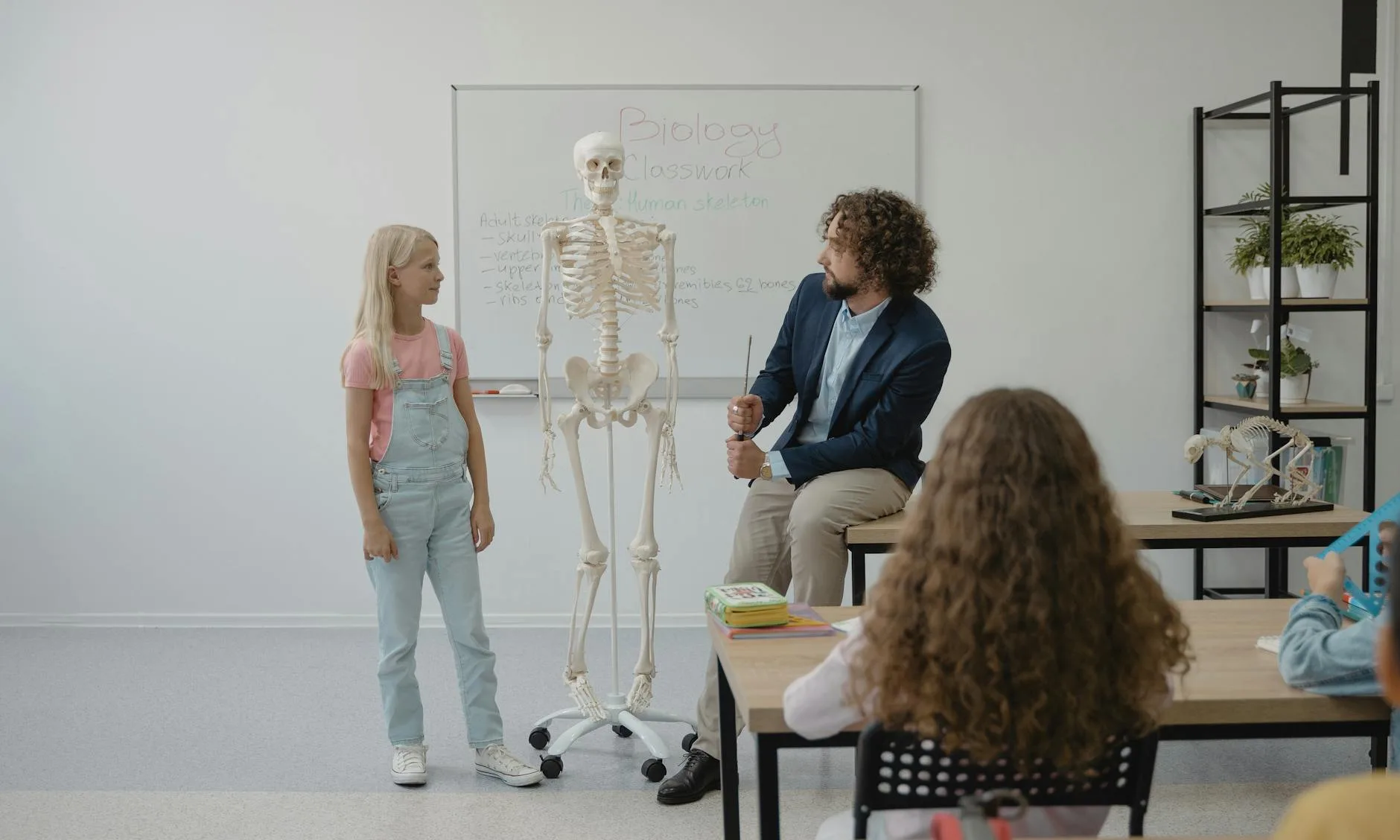
Biology learning benefits from connected explanations, labelled diagrams and practice describing processes accurately. Students may memorise terminology without understanding the relationship between parts of a system. A tutor can help by asking the learner to explain a diagram, compare two biological concepts or answer a fresh question without reading the textbook. Physics and Chemistry in the PCB stream may also require significant numerical and conceptual work.
Families interested in NEET should ask specifically about specialist entrance preparation and not assume every senior-secondary teacher handles that examination. A useful plan should distinguish school tests from exam-style practice and include review of recurring mistakes. Encourage students to use their current prescribed material and preserve time for independent revision. Tuition is most valuable when the learner grows more confident solving and explaining new questions, not merely repeating the teacher’s notes.
Commerce tuition: Accountancy, Economics and Business Studies

Commerce students can seek individual help with subjects that require different study methods. Accountancy develops from understanding journal entries and ledgers to handling larger financial statements. Economics often involves diagrams, definitions and interpretation of relationships. Business Studies requires organised written answers and application of concepts to examples. A prospective tutor should be familiar with the relevant grade and board instead of assuming that general commerce experience covers every requirement.
Ask the student to bring a recent school test and identify the steps they did not understand. A helpful tutor can demonstrate one example and then ask the learner to complete a similar question independently. Parents can explore the Accounts home tuition guide for additional questions. Confirm whether a single teacher is suitable for several commerce subjects, or whether distinct specialist arrangements are needed.
English, Social Science and languages in home tuition

Home tuition can also address reading comprehension, English grammar, vocabulary and written expression. A tutor may ask a student to summarise a passage, identify evidence and write a short answer in their own words. For Social Science, timelines, maps and cause-and-effect explanations can make complex material easier to understand. Students studying Hindi, Punjabi or other languages may need help with reading fluency, grammar or school-specific writing formats.
Parents should tell the teacher which textbooks and board apply. Review a sample of the child’s writing to distinguish comprehension difficulties from weak spelling or answer structure. Useful feedback identifies specific changes the learner can make independently next time. Assigning more pages is not necessarily better than explaining one concept well. Aim for steady progress and confidence, especially for children who hesitate to speak or write without repeated prompting.
CBSE, ICSE, IB and Cambridge tuition requirements

Different education boards can use different teaching sequences and assessments even when a subject name is the same. CBSE, ICSE, IB and Cambridge students should be matched with teachers familiar with their actual course where possible. During the enquiry, mention the board, class, subjects and school textbooks. Ask the tutor what materials and examples they would use and whether they have taught comparable students before. A generic worksheet may not suit every curriculum.
Families following relevant CBSE programmes can check CBSE Academic and NCERT for official educational resources. For other boards, consult their official documentation and the student’s school. A useful lesson plan should reflect current curriculum requirements and the child’s knowledge gaps, while allowing independent practice and feedback. Confirm appropriate tutor experience rather than relying solely on promotional claims.
Panchkula sectors, MDC and Amravati: travel and timing

Panchkula home tuition requests may come from numbered sectors, Mansa Devi Complex (MDC), Amravati and neighbouring residential areas. A teacher’s ability to arrive reliably matters as much as proximity. Evening travel and society entry arrangements can affect class timing, especially where a tutor already teaches students in another neighbourhood. Share the general sector and a practical window for tuition before discussing a particular teacher’s availability. Avoid publishing full household details in public comments.
Parents can explore the MDC home tuition guide and Amravati tuition information for more local context. These pages do not establish live availability in a given block or at a specific hour. Ask about a realistic travel route and whether another lesson time might provide a better match. A consistent timetable is often more valuable than frequent rescheduling.
How to choose the number of sessions per week

There is no single lesson frequency that fits every learner. Younger students may benefit from shorter activities, while Class 11 and 12 pupils sometimes need a longer session for complex numerical work. The subject, current school workload, proximity of examinations and amount of independent practice all matter. Parents can start with clear learning goals and ask how many sessions a prospective tutor reasonably recommends to address them without overloading the school week.
After a few weeks, assess whether the child can work more independently and explain concepts clearly. If progress is limited, ask whether the teaching method or prerequisite topics need attention rather than automatically adding hours. Leave enough time for meals, recreation, sleep and school assignments. Confirm how an occasional missed lesson is handled and whether the tutor can maintain the proposed schedule during busy examination periods.
Fees, payment timing and rescheduling considerations

Tuition fees may vary with class level, subject complexity, teacher experience, travel distance, number of sessions and lesson duration. A family should ask what the quoted amount includes and whether several subjects will require different tutors. It is helpful to clarify homework review, materials, parent feedback and any additional charges before beginning classes. Avoid assuming one published fee would apply across all grades and specialisations.
Ask for clear information on payment timing, cancellations, rescheduled sessions and notice requirements for stopping tuition. Keeping these practical details in writing can prevent confusion. A higher fee does not guarantee a better teaching fit, and a low fee may provide poor value if attendance is unreliable. Choose an arrangement that combines suitable expertise with consistency and reasonable expectations. Exact rates and policies should be confirmed directly with Best Home Tuition.
Home tuition or online one-to-one learning?

In-person tuition can help students who benefit from face-to-face explanations, working on paper and a familiar home environment. Individual online tuition may be practical when a subject specialist cannot travel to the student’s area or a different time is needed. The most suitable choice depends on the learner’s age, subject, concentration and ability to use technology. Neither mode guarantees better academic results on its own.
For online lessons, check stable internet, sound quality and the tutor’s ability to display written solutions and diagrams. Younger children may need adult support during sessions, while older pupils may work more independently. For in-person teaching, confirm a reliable route and quiet study space. The online tuition guide explains useful setup questions. Families can review their choice after a few weeks if the format is not helping.
What happens in a useful introductory teaching session?

A first teaching session should reveal how the tutor works with a real learning problem. Parents can choose a chapter the student finds confusing and provide an exercise from school. Watch whether the teacher checks what the learner already knows, explains the difficult step clearly and asks the child to attempt a new question independently. Afterward, ask the student what became easier and what still needs practice. This is more informative than selecting a teacher on credentials alone.
An introductory lesson may be available, subject to current terms. Confirm whether the offer applies to the subject, locality and current booking, and ask about any conditions before arranging it. Also discuss session length, frequency and how progress will be communicated. A demonstration can help judge teaching clarity and comfort but cannot guarantee future examination marks. Parents should compare several practical factors before making a regular commitment.
A four-week progress review parents can use

In the first week, review recent tests, school notebooks and a few problems completed without assistance. Choose two or three measurable goals: fewer calculation mistakes, a clearer English paragraph or stronger recall of a Science process. During the second week, give targeted practice and revisit difficult prerequisites. In the third week, use new examples to confirm understanding instead of repeating only memorised questions. The learner should increasingly explain the method without hints.
In the fourth week, compare similar work with the starting examples. Ask which mistakes are occurring less often, what can now be solved independently and whether the pace should change. Progress may show first through confidence and consistent study habits, before a major mark change. If improvement is slow, adjust teaching methods or resources rather than immediately increase homework. A responsible tutor provides useful feedback without guaranteeing a particular grade or rank.
Safe, respectful and comfortable learning arrangements

Parents should agree on an appropriate space for lessons, the method of communication and supervision suitable for the child’s age. Ask about qualifications and references where practical, and confirm punctuality and household entry arrangements. Students should feel able to ask questions or raise concerns with a trusted adult. Supportive teaching corrects errors patiently and avoids shaming children for needing another explanation. A calm learning environment helps students participate honestly.
A family’s preference for a male or female tutor can be mentioned during the enquiry, but subject expertise and the child’s comfort should also guide the decision. Private household information need not be placed in a public post to start a search. Discuss how lesson times can be changed and what happens if an arrangement proves unsuitable. Safety and respectful conduct are important parts of a sustainable tuition relationship.
Frequently asked questions and next steps for Panchkula families

Which classes can parents enquire about? Classes 1–12, subject to suitable tutor availability. Can one tutor teach Maths and Science? Discuss the student’s grade and specific subjects; a specialist may be needed. Are fees fixed? Costs depend on the class, subject, schedule and arrangement. Can a tutor come to MDC or Amravati? Travel feasibility must be confirmed. Is a demo free? Check the current offer and conditions directly.
Can I request a male or female tutor? Share your preference and academic needs. Is JEE or NEET preparation possible? Ask specifically about specialist availability. Are online lessons an option? Individual online tuition may suit some requirements. To enquire with Best Home Tuition, share class, school board, subject, locality and preferred timing. Parents can also consult the Panchkula home tutor guide before confirming fees or an arrangement.
BEST HOME TUITION – PANCHKULA
Share the student’s class, board, subject, sector and preferred timing to enquire about individual tuition.
Call: 8872339669
Call Best Home Tuition WhatsApp Your Requirement
Teacher availability, fee and demo terms are subject to confirmation.
