Physics Home Tuition in Panchkula offers families a way to enquire about subject-specific home visits for school students, including Class 9–12 Physics or relevant Science topics. Best Home Tuition can discuss suitable tutors and timing, subject to experience, travel and availability. The guide below explains how home sessions can be organised and measured without making promises about marks or teacher assignment.
Quick answer: Share your student’s class, school board, Physics topics, Panchkula neighbourhood and preferred lesson time. Ask about subject expertise, scheduling, fees and any demo conditions before agreeing to tuition.
How Physics home tuition works in Panchkula

Physics home tuition is a way to arrange subject-focused lessons at the student’s home, with the pace shaped by the learner’s actual schoolwork. Families may need help with difficult Class 9 Science concepts, Class 10 numericals or specialised Class 11 and 12 Physics. The first conversation should establish the student’s class, education board, current chapter, general Panchkula locality and preferred lesson days. A suitable teacher must have the relevant subject experience and a timetable that allows reliable travel.
Best Home Tuition can discuss possible teaching arrangements, subject to current tutor availability. The purpose of a visiting lesson is not to complete the student’s homework for them. Instead, a teacher can identify confusing steps, explain a principle and ask the learner to attempt fresh questions. Parents should confirm duration, weekly frequency, fees, travel feasibility and any demonstration policy before beginning. This guide focuses on the practical arrangement and learning experience rather than making claims about particular teachers or guaranteed results.
What to include when requesting a visiting Physics teacher

An informative first message can be short: Class 11 CBSE Physics, needs help with motion and vectors, Panchkula Sector 20, available after school on selected evenings. Another family might say Class 10 Science, trouble with electricity and light, prefers lessons at home. The class and board matter because Physics is taught at different levels. Mention whether the student wants regular school support or specialised preparation for JEE or NEET, since those goals may require different experience.
Parents can also explain a known learning difficulty. For example, the learner may remember formulas but struggle to decide which one applies, or may understand an explanation but lose marks due to unit conversion. There is no need to post a complete home address publicly. Share a general locality first, then discuss exact travel arrangements privately when a potentially suitable teacher has been identified. Clear requirements can make tutor matching and fee discussions more practical.
Preparing a suitable study space for Physics lessons at home

A useful study space does not need specialised equipment. A clear table, comfortable seating, adequate light, school notebooks, textbooks and basic stationery are enough for many lessons. Keeping a ruler, graph paper and a calculator where permitted by the syllabus can help the learner draw diagrams and organise calculations. Reducing unnecessary noise and phone notifications makes it easier to follow multi-step explanations. Younger students may benefit from an adult nearby, while older students may prefer a quieter setting.
Families should agree with the tutor where lessons will take place and how homework or progress updates will be communicated. Physics examples sometimes refer to electrical equipment, heat or moving objects, but this does not mean a household should become an improvised laboratory. Use diagrams, school-approved resources and safe demonstrations rather than unsupervised experiments. A predictable study environment can help the child concentrate and practise independently between visits.
What a 60-minute Physics lesson could look like

A one-hour session can be divided into several purposeful activities, although the right duration should be agreed for the particular learner. For example, the tutor may spend ten minutes reviewing an earlier misconception, fifteen minutes explaining a new concept, twenty minutes working through guided and independent questions, and fifteen minutes correcting mistakes and planning revision. These are illustrative allocations, not a fixed service promise. Some advanced problems need longer uninterrupted work; younger students may need shorter activities.
An effective session asks the student to do more than listen. Before substituting numbers into a formula, the learner should describe the physical situation, identify known quantities and explain the chosen relationship. At the end, they should attempt an unfamiliar problem or explain a diagram without prompts. A teacher can then report what improved and which earlier concept still needs revision. The lesson structure should change when evidence shows that the current approach is not helping.
Class 9 Physics foundations: diagrams and explanations
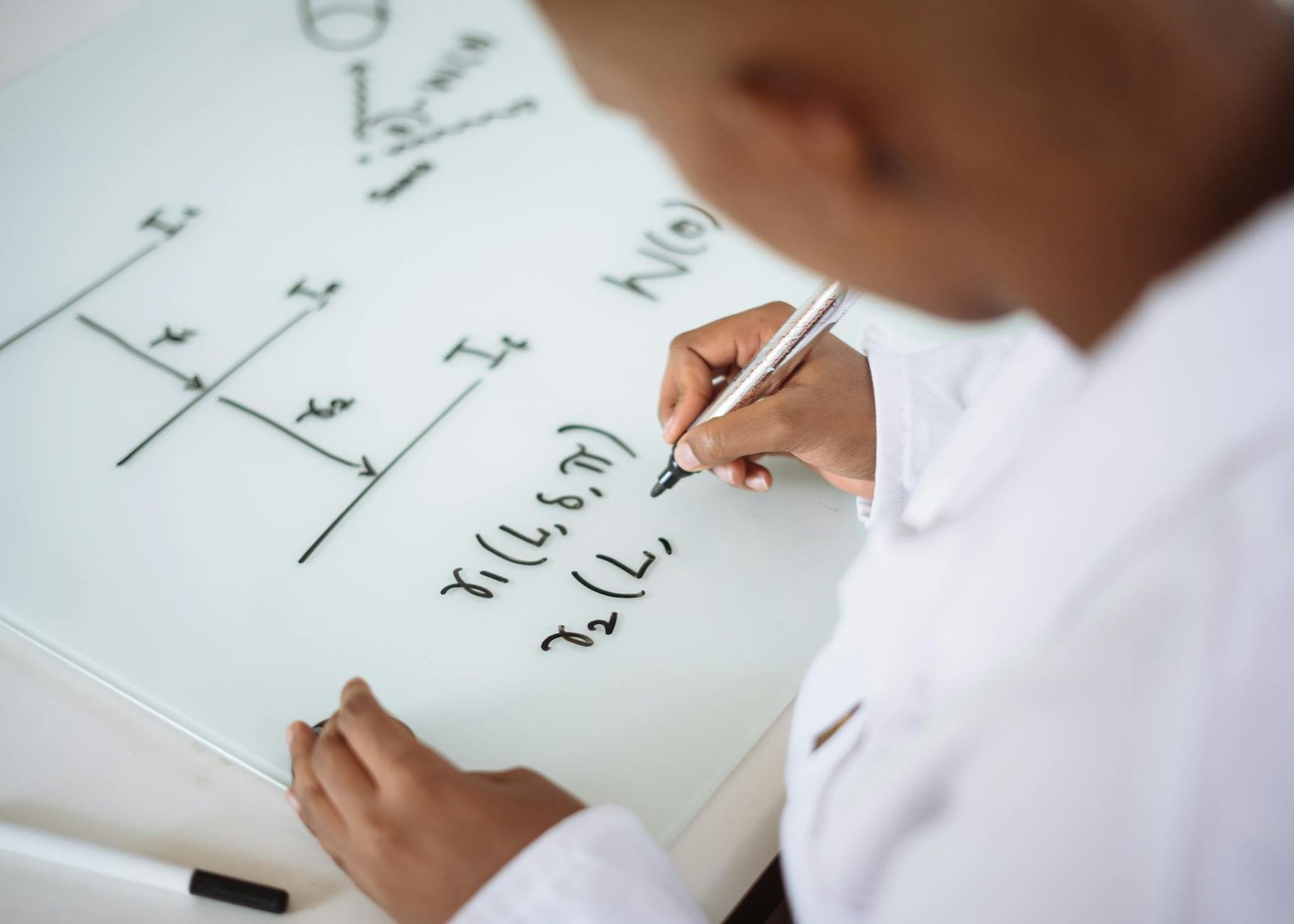
Class 9 Science may introduce Physics topics such as motion, force, gravitation, work or sound, depending on the board’s current syllabus. These subjects can be confusing when students learn definitions without relating them to an observation. A tutor can begin with a simple description, use a clear diagram, then introduce equations only when the physical meaning is understood. A learner who misreads a graph may need graph interpretation rather than more practice remembering formulas.
Parents can ask the teacher to review a recent school test and choose two or three specific weaknesses. For example, a student may know the meaning of speed but confuse distance and displacement, or may write an incomplete explanation of a force. Lessons should use the prescribed school textbook and allow the student to answer questions independently. A patient approach at this level builds a foundation for later numerical work and more complex reasoning.
Class 10 Science: Physics topics and board-style answers

For Class 10 students, Physics support may involve light, electricity, magnetic effects or other topics required by their school board. A tutor should help the student read question conditions carefully, draw useful diagrams and show calculations with appropriate units. Learning a formula by itself is not enough; the learner should know when it applies. Written Science answers should link the physical principle to the question and use terms accurately. Small errors in diagrams or sign conventions can affect an otherwise correct solution.
Families should check the actual syllabus and examination requirements, rather than rely on outdated lists of important chapters. The official CBSE Academic website provides published material for relevant CBSE courses. A teacher can combine concept lessons with short answer practice and review of school mistakes. Timed questions may help later in revision, but they should not replace understanding. No tutor can guarantee a particular board score.
Class 11 Physics: maths skills, motion and problem setup
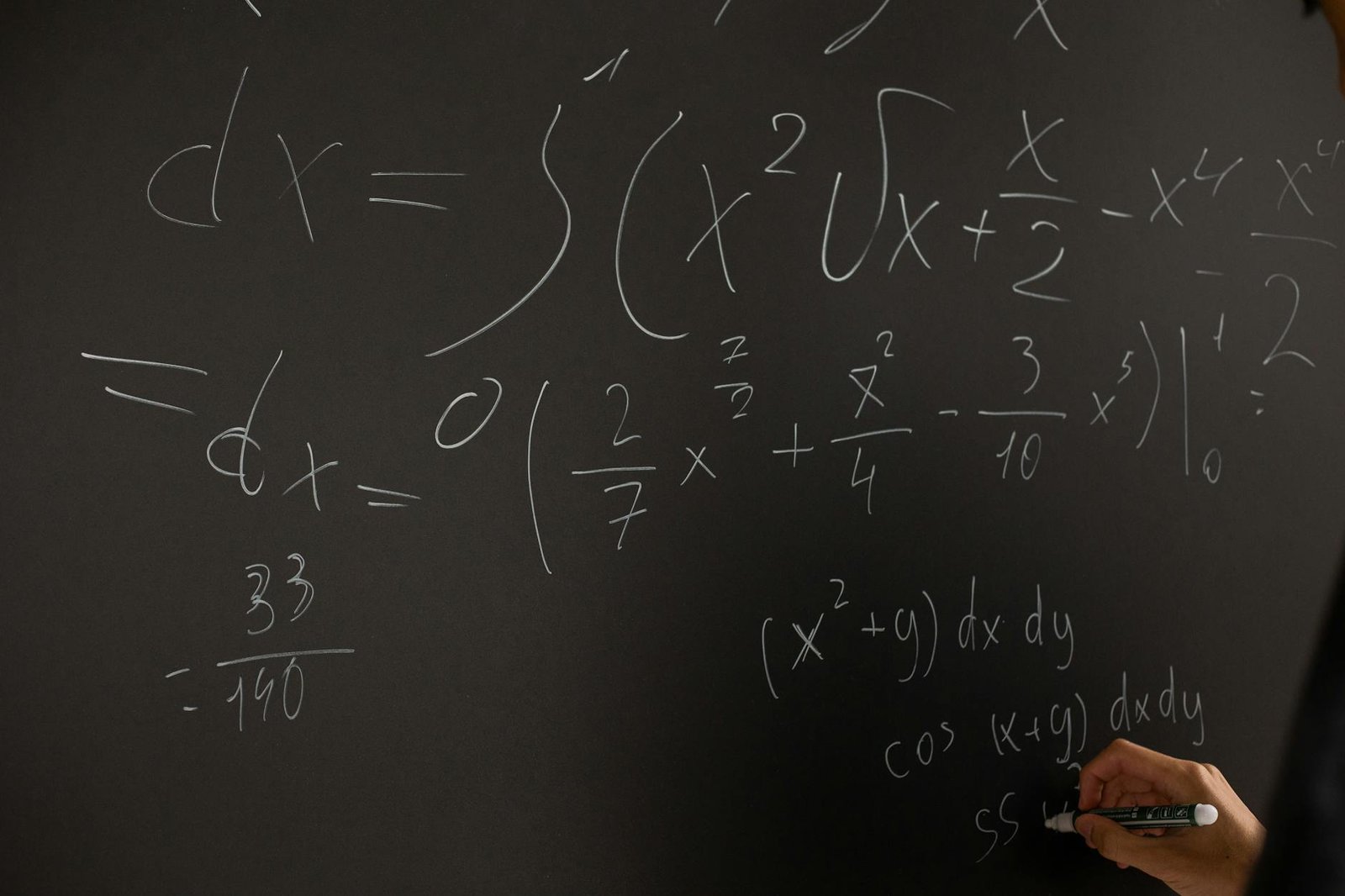
Senior-secondary Physics can become difficult when a student must combine mathematical reasoning with physical concepts. Depending on the syllabus, Class 11 may involve measurement, vectors, motion, forces, energy and other foundational subjects. A tutor can ask the learner to draw a picture of the situation, state what is known and explain the assumptions before selecting equations. When a student consistently struggles with algebra or unit conversions, revisiting those skills can be more helpful than rushing to advanced examples.
A home tuition plan should use the current textbook and school assessments to choose appropriate practice. After a guided explanation, ask for a different question so the student cannot rely entirely on memorising a worked solution. Families may enquire about a specialist rather than assuming one general all-subject teacher has sufficient senior-secondary Physics experience. Class duration and frequency should leave time for schoolwork and independent revision.
Class 12 Physics: revision, applications and written workings

Class 12 Physics can demand longer numerical workings, accurate scientific diagrams and explanation of abstract concepts. Depending on the curriculum, students may study electricity, magnetism, optics or modern Physics. An in-home tutor should check the student’s actual chapters and past assessments before selecting revision tasks. Some mistakes come from choosing an unsuitable relationship; others come from weak algebra, unit conversion or missed steps. Each type requires a different correction instead of more of the same worksheet.
A weekly plan can combine difficult new content with spaced review of earlier ideas. Encourage students to complete some questions without the tutor’s guidance, then compare their reasoning with the correct approach. Near examinations, timed practice can be introduced after concepts are understood, but the schedule should remain realistic. Parents can ask for a concise progress review based on the student’s independent work rather than a promotional promise of exam success.
Work and energy: a short Physics example for revision
Consider a simple problem: a 2-kilogram object moves at 3 metres per second. Its kinetic energy is one-half times mass times speed squared, so the value is ½ × 2 × 3² = 9 joules. A tutor can help the student identify the mass and speed, check the units and explain why the speed is squared. The example is an idealised calculation for learning the formula; it is not a recommendation to perform a physical demonstration at home.
Next, the learner might consider what happens to kinetic energy if the speed doubles while mass remains the same. Because speed is squared, the energy becomes four times as large. This follow-up checks understanding of the relationship, rather than the ability to copy the first numerical example. The tutor can ask for a written explanation in words as well as the calculation. Similar exercises help connect conceptual reasoning with mathematical steps.
Electricity at home: explain concepts without unsafe experiments

Physics lessons often use familiar electrical examples, but household wiring should never be used as an improvised classroom experiment. A visiting tutor can explain current, potential difference and resistance using diagrams, approved school materials and clear numerical questions. The learner should understand the assumptions behind a relationship and check units. If the student has a weak foundation in proportional reasoning, it may be sensible to revisit simple mathematical relationships before adding harder circuit questions.
Where hands-on experiments are required by the syllabus, they belong in properly supervised and equipped settings. At home, educational diagrams or suitable demonstrations can support understanding without creating risk. Families should not be asked to provide equipment simply because a tutor is visiting. A safe learning plan can still teach how to interpret measurements, explain an observation and draw an appropriate conclusion.
Waves, sound and optics: using diagrams effectively

Some Physics concepts are easier to understand visually. Sound and wave questions may involve amplitude, frequency, time and the interpretation of graphs. Optics questions may require ray diagrams, the position of an object or the behaviour of a lens or mirror. A visiting tutor can draw a diagram, discuss the principle and then ask the learner to create a similar figure independently. This helps reveal misunderstanding that might be hidden by memorised definitions.
Students should label diagrams clearly and explain what each line or axis represents. If a numerical answer seems wrong, the tutor can check whether the issue comes from the Physics concept, the sign convention or reading the question. Different boards require different depths of treatment, so school materials should guide the lesson. Regular small revisions can help retain ideas rather than leaving all diagrams until the week before an assessment.
Physics home tuition for CBSE, ICSE, IB and Cambridge

Physics tuition should be appropriate for the learner’s specific education board. CBSE, ICSE, IB and Cambridge courses can differ in depth, order of topics and styles of assessment. Parents should mention the class, board and schoolbooks when seeking a tutor. A teacher who knows Physics well may still need to become familiar with the exact course expectations before preparing worksheets or mock questions. Curriculum matching is especially important for older students and examination classes.
For CBSE learners, families can review CBSE Academic and relevant NCERT resources. For other boards, consult the school and the official examination organisation. Ask the proposed tutor how lesson topics, diagrams and answer styles will reflect these materials. Avoid relying only on old internet summaries that may not match the current syllabus.
JEE and NEET Physics: enquire about specialist experience

School Physics tuition and competitive examination preparation share important scientific concepts, but they may call for different question styles and a different revision pace. If a student is considering JEE or NEET, parents should explicitly name the intended examination and the areas where support is needed. Ask whether the teacher has relevant experience with the subject at that level. A general school Physics tutor is not necessarily a specialist in entrance-exam problem solving.
A sensible approach still starts with understanding and works toward increasingly demanding questions. If a learner cannot explain an elementary principle, timed advanced tests may be premature. Specialist preparation should allow room for school responsibilities, other examination subjects and independent revision. No tuition service can responsibly guarantee a rank, admission or examination result. Ask for a clear method, realistic workload and feedback on recurring mistakes.
Panchkula neighbourhoods: teacher travel and session timing

An in-person Physics teacher needs a feasible route to the family’s home as well as relevant subject expertise. Panchkula’s numbered sectors, Mansa Devi Complex (MDC), Amravati and other residential neighbourhoods may involve different travel considerations. Share the general locality and acceptable teaching window when making an enquiry, especially if classes must begin immediately after school. A teacher who is academically suitable but cannot arrive reliably may not be the right choice for an ongoing arrangement.
Families can review MDC Panchkula home tuition information and the Panchkula tutor guide for related local context. These pages do not establish real-time teacher availability. Avoid posting a full residential address in public comments. Confirm the route, start time, frequency and arrangements for residential society entry directly once a potential teacher has been identified.
Physics home tuition fees, cancellations and payment questions

Fees for home visits may depend on the class, board, subject depth, tutor experience, travel, session length and weekly frequency. Class 9 foundational Science support is not directly comparable to specialist Class 12 or entrance-exam coaching. A single universal hourly rate is not reliable without a current quote for the student’s actual requirement. Before deciding, ask what each visit includes, whether there are additional materials or assessment charges, and how progress feedback is provided.
Parents should also clarify payment timing, missed classes, makeup lessons and notice requirements for changing or stopping tuition. Keeping the agreed terms in writing helps avoid misunderstandings. A lower fee does not automatically make an arrangement better value, and a high price is not a guarantee of effective teaching. Compare subject fit and punctuality as well as costs. A timetable that suits the student and can be followed consistently is an important part of the arrangement.
When online Physics is a practical alternative to home visits

Individual online Physics may be practical when a specialist cannot travel to a Panchkula locality or a family needs a different lesson time. A teacher should be able to show calculations, diagrams and annotations clearly through an appropriate digital whiteboard or shared screen. Audio quality, stable internet and the student’s ability to ask questions are important. The learner also needs a way to send their own solution for feedback rather than watching passively.
In-person tuition may be more comfortable for some students, particularly those who need help organising notebooks and written steps. The choice depends on the learner’s age, subject complexity and concentration. Families can read the online home tuition guide for practical considerations. A trial lesson can help compare formats, subject to any current offer and conditions. Neither format automatically produces better results.
How to track Physics progress over the first four weeks

During the first week, the tutor can review schoolwork and select two or three measurable goals. One student might need to label diagrams accurately; another might need to apply equations with correct units. Keep a few answers completed independently as a starting point. In week two, practise the main weakness with guidance and then a new question. Week three should revisit the earlier topic with unfamiliar wording or changed numbers so the learner must apply understanding.
At the end of week four, compare work of similar difficulty and discuss which errors are now less common. Parents can ask what the child can explain without hints and whether the teaching pace needs adjustment. Academic confidence may improve before school marks change. If progress is slow, revisit the missing prerequisite or the style of explanation rather than simply adding lesson hours. A measured review helps create a better plan for the next month.
Supporting healthy learning habits alongside home lessons
Regular homework and school assessments can already fill much of a student’s week. Home tuition should fit alongside school commitments, meals, sleep and recreation, not remove every opportunity for independent learning. Ask the tutor for manageable practice that reinforces the lesson, such as a few carefully chosen numericals and corrections of earlier mistakes. Encourage students to attempt a problem before asking the teacher for help at the next class.
Families can provide a quiet place to study and check whether the student is developing confidence instead of focusing solely on the number of pages completed. A tutor who listens to questions and corrects mistakes respectfully creates a more useful learning environment. For younger students, establish appropriate adult awareness of home visits. If a particular routine is producing overload or anxiety, discuss a different schedule or smaller practice tasks.
Frequently asked questions about Physics home tuition
Can Class 9 and 10 students enquire? Yes, describe the current Science topics and board. Can Class 11 and 12 students request a Physics specialist? Families can enquire, with experience and availability to be confirmed. Do you offer JEE or NEET preparation? Ask specifically about examination-oriented teacher expertise. Is a demo always free? Confirm the current terms before scheduling. Can a tutor travel to MDC or Amravati? Provide the general locality and preferred time for a practical availability check.
What should be ready for a first class? The schoolbook, notebook, recent tests and a list of difficult chapters. Is online one-to-one Physics possible? Enquire about available teaching formats. How are fees decided? Class level, duration, specialist expertise and travel may all matter. Will a student get guaranteed marks? No responsible tutor can promise that; review independent understanding over several weeks. Contact Best Home Tuition on 8872339669 to discuss the exact requirement.
Contact Best Home Tuition for a Panchkula Physics home tutor

Parents can make an initial enquiry with the student’s grade, board, required Physics topics, general Panchkula neighbourhood and preferred days. Explain whether support is needed for daily school lessons, board examination revision or specialist JEE or NEET preparation. Mention the approximate time the student returns from school so the proposed schedule can be considered realistically. A tutor’s subject experience, availability and travel route need to be checked before any lessons are confirmed.
Best Home Tuition can discuss possible arrangements and current fees on 8872339669. Ask about how the teacher would assess the learner, provide independent practice and report progress. Families can compare the idea of home visits with private Physics tuition learning plans before deciding. A clear first conversation helps set expectations without promising a particular mark, teacher assignment or free demonstration.
BEST HOME TUITION – PHYSICS IN PANCHKULA
Share your student’s class, board, difficult chapters, general locality and preferred timing for home tuition.
Mobile: 8872339669
Call Best Home Tuition WhatsApp Tuition Enquiry
Teacher availability, fees and any demonstration terms must be confirmed directly.
