MATHS HOME TUITION 8872339669
Maths Home Tuition: A Practical Guide for Parents and Students

A maths home tutor can help students understand the ideas behind calculations rather than memorising answers. Begin with a short assessment of the learner’s current skills, review schoolwork and identify recurring mistakes. A good lesson includes a clear explanation, a worked example and independent practice. Parents can ask for progress updates that describe the chapters covered and the skills the student can now use without help. Lessons should follow the learner’s current board syllabus and build confidence gradually.
Choose the right maths tutor

Check experience with the student’s class and board, the teacher’s explanation style, homework approach and availability. Discuss fees and lesson arrangements before starting. Families in Panchkula, Zirakpur and Mohali can explore Panchkula home tuition or contact the team. For current CBSE curriculum guidance, visit CBSE Academic.
Diagnose weak maths foundations before moving ahead

A student who finds algebra difficult may actually be struggling with fractions, negative numbers or multiplication. A good maths home tutor checks prerequisite skills before assigning a long set of new exercises. The tutor can ask the student to solve a few representative questions and explain each step aloud. This shows whether the problem lies in understanding the question, selecting a method or carrying out calculations. The results can become a short learning plan with clear priorities. For example, a learner who cannot combine fractions reliably should revise equivalent fractions before solving equations that contain fractions. Parents can ask which foundational skills were checked and how progress will be measured. Repeat the diagnostic after several weeks to see whether the learner can now solve similar problems independently. The aim is to find and fix the cause of difficulty rather than repeat the same chapter without improvement.
Primary maths: number sense and arithmetic

For younger students, mathematics begins with understanding quantities, number patterns, place value and the four basic operations. A tutor can use counters, a ruler, a clock or familiar shopping examples to connect numbers with real situations. Children should learn to estimate an answer before calculating, because estimation helps them notice when a result is unreasonable. Short exercises with immediate feedback are often more effective than a large worksheet completed without understanding. When a child makes a mistake, ask how the answer was reached instead of simply providing the correct number. The explanation may reveal confusion about carrying, borrowing, multiplication facts or the meaning of division. Build confidence gradually by starting with manageable examples and changing one feature at a time. Encourage regular practice without turning every lesson into a speed competition. Accuracy, curiosity and the ability to explain an answer are stronger foundations for later maths than memorising isolated tricks.
Fractions, decimals and percentages explained

Fractions, decimals and percentages represent related ways of describing quantities. Students should see why one-half, 0.5 and 50 percent describe the same share instead of memorising a conversion rule without context. A tutor might draw a divided rectangle or use a number line to compare values. Begin with equivalent fractions and simple conversions, then move to operations and word problems. When adding fractions, learners need to understand why the denominators matter. Percentage problems should distinguish finding a percentage of an amount from finding a percentage increase or decrease. A discount example can help, but the student must identify the original amount before calculating the change. Encourage learners to estimate and check the final answer. These skills support algebra, ratio, statistics and many everyday calculations. If mistakes recur, revisit the visual explanation and ask the student to solve a new example independently.
Algebra: understand equations rather than copy steps
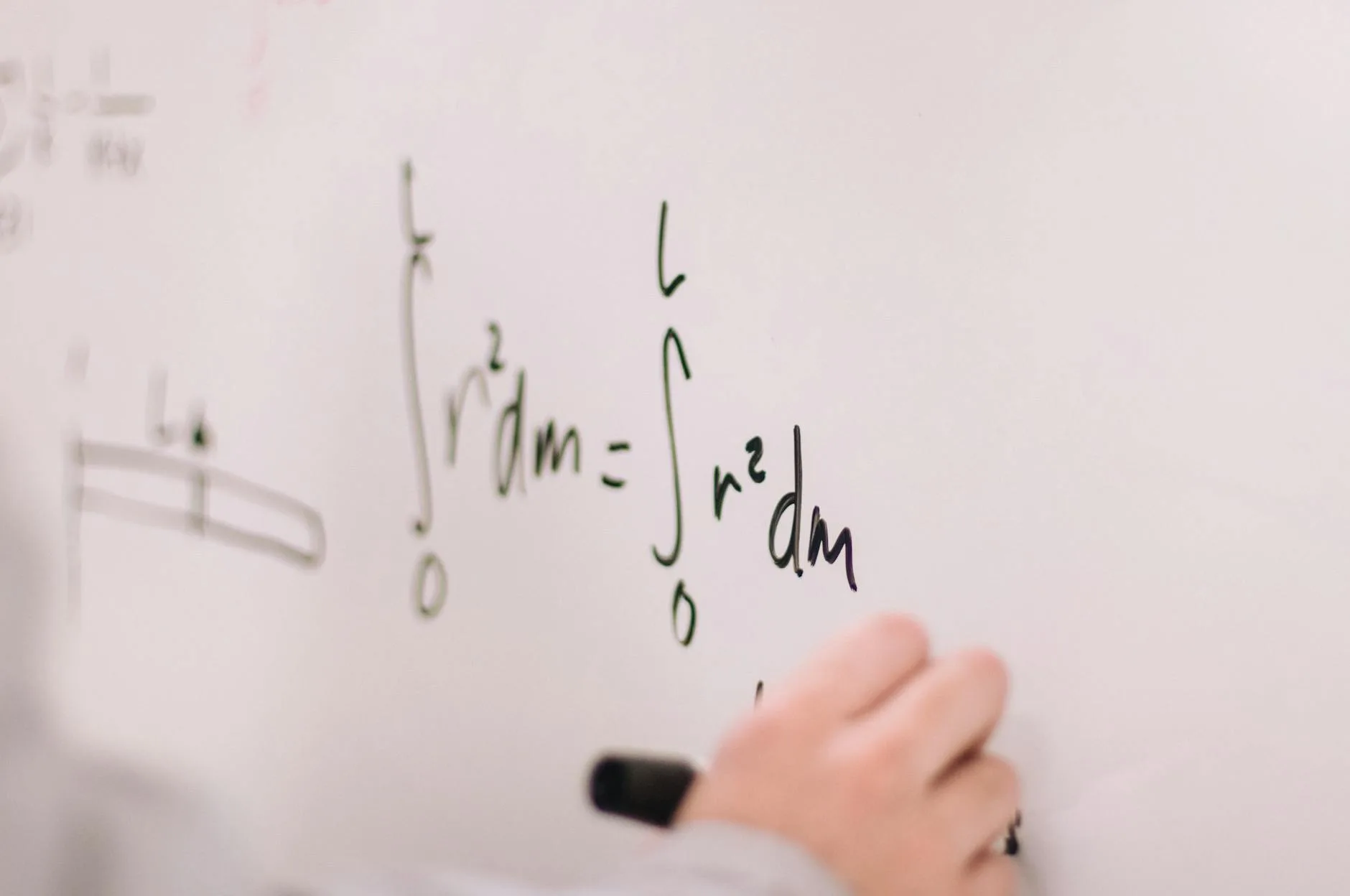
Algebra becomes easier when a learner understands that a variable represents a quantity. Begin with patterns and simple expressions, then explain an equation as a statement that two sides are equal. A balance analogy can help show why the same operation is applied to both sides. For example, solving a linear equation should involve a sequence of justified steps, followed by substitution to check the result. Common errors include changing signs incorrectly, combining unlike terms and skipping intermediate calculations. A tutor should locate the exact step where the reasoning fails rather than merely mark the final answer wrong. Word problems deserve special attention because students must translate sentences into mathematical relationships. Ask the learner to define the unknown quantity before writing an equation. Once basic equations are comfortable, progress to the identities, polynomials and other topics required by the current syllabus. The goal is to choose a method independently when the question changes.
Online and in-person maths tuition: practical differences

In-person maths tuition can make it easy for a teacher to inspect handwritten workings and notice when a student becomes confused. Online tuition may offer scheduling flexibility, but it requires a reliable connection and a practical way to share equations, diagrams and solutions. A digital writing pad, shared whiteboard or clear camera view of the student’s notebook can help. The best format depends on the learner’s age, independence and comfort with technology. Younger children may need an adult nearby to help set up an online session. For either format, ask how the tutor will assess understanding, assign practice and correct errors. A demonstration lesson can help families evaluate whether explanations are clear, though availability should be confirmed. Do not assume that one format automatically produces better results. Consistent feedback and independent practice matter in both settings.
Geometry and proof in school maths

Geometry is about understanding why properties hold, not merely copying diagrams. A tutor should ask the learner to label given angles, lengths and relationships before deciding which theorem applies. Students need to distinguish what a drawing seems to show from what the question actually states. In triangle problems, the conditions for congruence or similarity should be checked carefully. For circles and quadrilaterals, begin with basic properties and gradually combine several ideas in one question. A proof should include a logical sequence of statements supported by reasons. Encourage learners to explain why a particular theorem is relevant and to compare methods when more than one approach works. In measurement questions, include correct units and check whether the required quantity is a length, angle or area. Regular practice with unfamiliar diagrams builds flexible reasoning and reduces dependence on memorised solutions.
Mensuration, area and volume

Mensuration includes perimeter, area, surface area and volume. Students often confuse these measures because formulas are memorised without understanding what they describe. A tutor can compare fencing around a garden with the grass inside it to explain perimeter and area. A cardboard box illustrates the difference between surface area and the space it holds. Before calculating, the learner should identify the shape, label dimensions and check that measurements use compatible units. For compound shapes, break the diagram into manageable parts and explain which areas should be added or subtracted. Estimation is useful for catching errors: a very large result or an area expressed in cubic units should prompt a review. After a worked example, ask the student to solve a different question that requires choosing the correct formula independently. Practical understanding helps learners tackle unfamiliar word problems.
Trigonometry for secondary classes

Trigonometry introduces relationships between angles and sides of triangles. Students should first identify the hypotenuse, opposite side and adjacent side relative to a chosen angle. Draw a clear right triangle before explaining sine, cosine and tangent. Standard values and identities become easier to use when the learner understands the underlying relationships. For heights and distances problems, sketch the situation and mark known measurements before selecting a ratio. Common errors include using the wrong side, changing a sign or applying an identity without checking its conditions. Ask students to show transformations clearly and verify results where possible. Higher classes may require more advanced trigonometric equations depending on the syllabus. Mixed practice matters because students need to select an appropriate method rather than repeat the one demonstrated immediately before. A tutor should encourage explanations instead of formula memorisation alone.
Statistics and probability explained

Statistics helps learners organise and interpret data. A tutor can begin with tables and graphs, then explain mean, median and mode using small sets of values. Students should understand what an average describes and when it may conceal important differences. Probability can begin with simple experiments such as tossing a coin or rolling a die. Ask learners to list possible outcomes and explain whether those outcomes are equally likely. When interpreting graphs, pay attention to labels, units and scales. Common errors include missing outcomes, misreading axes and confusing frequency with probability. Students should explain the meaning of a calculated result in ordinary language. This connects mathematics with reasoning and prepares them for unfamiliar exam questions. Use examples that suit the student’s class and current syllabus.
Class 9 and 10 maths exam preparation

Classes 9 and 10 require both conceptual understanding and careful exam practice. A tutor should check the current syllabus and identify chapters that need revision. Algebra, geometry, trigonometry, statistics and mensuration involve different skills and should not be taught using a single routine. Start with prescribed textbook questions and add targeted practice when a weakness appears. Once accuracy improves, introduce timed exercises. After a test, review errors by category: misunderstanding, arithmetic mistakes, missing reasoning, poor presentation or time management. Encourage the student to correct their own work after receiving guidance. CBSE students can consult the official CBSE Academic website for curriculum and assessment information. Old sample papers should be checked against the current syllabus before use. A steady revision routine is more useful than completing a chapter once and never revisiting it.
Class 11 mathematics foundations

Class 11 mathematics often requires more abstract reasoning than earlier classes. A tutor can review algebraic manipulation, graphs and functions before moving to unfamiliar topics. Depending on the board, students may study sets, relations, trigonometry, coordinate geometry, sequences and probability. Explain what mathematical notation means and why a method applies before asking the learner to memorise formulas. After a worked example, provide a question with changed values or conditions to check genuine understanding. Homework should include routine exercises and some problems that require choosing an approach. Keep an error log to identify persistent weaknesses in algebra, fractions or graph interpretation. Students planning to prepare for entrance examinations should develop reliable fundamentals before attempting advanced shortcuts. A consistent weekly schedule makes complex topics more manageable.
Class 12 maths and calculus
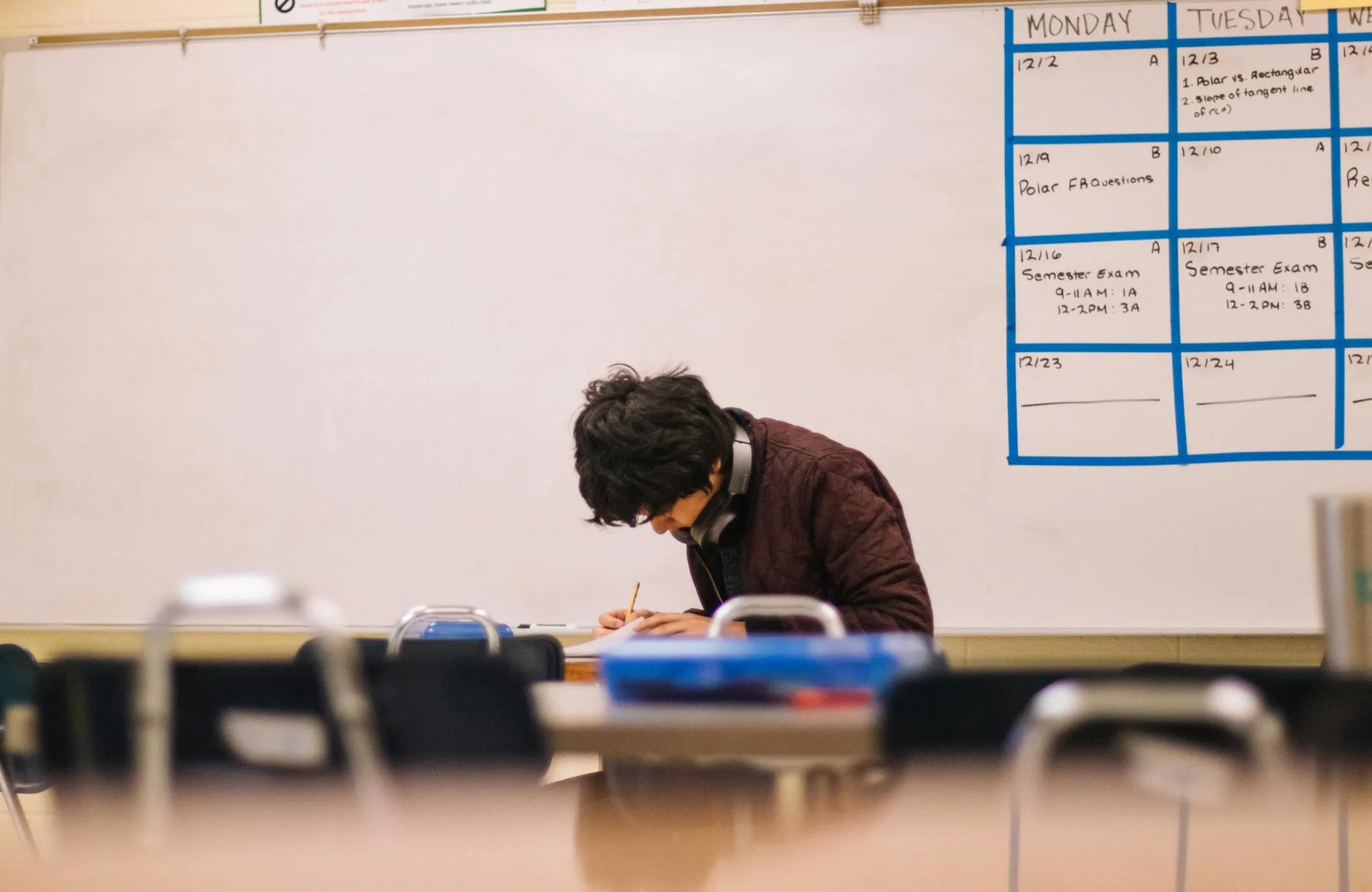
Class 12 mathematics may include matrices, determinants, calculus, vectors, three-dimensional geometry, probability and other topics prescribed by the board. A tutor should map the student’s strengths and difficulties against the current syllabus. Calculus requires conceptual understanding and accurate algebra, so learners should explain why a differentiation or integration rule applies rather than memorise only the final expression. Encourage clear intermediate steps so mistakes can be found. Timed practice is important for lengthy examination papers, but accuracy should come before speed. Alternate new chapters with revision of earlier topics. Students can consult NCERT educational resources alongside their prescribed textbook. Good feedback should address reasoning, presentation and independent problem solving. No responsible tutor can guarantee a particular examination result.
How to solve maths word problems

Word problems require students to translate written descriptions into mathematical relationships. Begin by reading the question carefully and identifying what is known and what must be found. Define the unknown quantity, then choose a table, diagram or equation to represent the situation. A tutor should avoid supplying the formula immediately because choosing an approach is part of the skill. Encourage learners to estimate the likely answer before calculating. After solving, return to the original question and check whether the result answers it with suitable units. Begin with familiar examples and gradually increase complexity. Asking students to explain their reasoning aloud helps reveal whether they understand the relationships or are following a memorised procedure. This method supports arithmetic, algebra, geometry and applied mathematics across many classes.
Homework and error logs for progress

Homework should reveal what a student can do without immediate assistance. A tutor can assign a manageable set of questions from the current chapter plus a few earlier topics. Students should attempt the work independently and mark the steps where they became unsure. In the next lesson, review why mistakes happened rather than simply replacing wrong answers. An error log can record the topic, incorrect step, corrected method and a new question for practice. Patterns may emerge, such as sign errors, missed units, incorrect formula selection or difficulty interpreting instructions. Parents can support the routine by providing a quiet study space and encouraging practice without doing the questions for the learner. Progress should be measured through independent accuracy and clear explanations, not only the number of pages completed.
Weekly revision plan for maths tuition

A practical weekly plan depends on the student’s age, school workload, examinations and attention span. One session might introduce a concept and show guided examples, while another focuses on independent practice and feedback. Include brief retrieval exercises from earlier chapters so skills are not forgotten. Short quizzes help identify whether a method has been retained. If the learner has major foundational gaps, extra time on prerequisites may be more useful than rushing into the next chapter. Older students can gradually practise mixed-topic questions under time limits; younger children may benefit from shorter activities and concrete examples. The tutor should adjust the plan after school assessments and diagnostic checks. Parents can request occasional summaries showing topics covered, recurring errors and next priorities. Consistency and clear feedback are more useful than adding lesson hours without a defined purpose.
Maths tuition in Panchkula, Zirakpur and Mohali

Families seeking maths home tuition in Panchkula, Zirakpur, Mohali or nearby Chandigarh areas should share the student’s class, board, locality, difficult chapters and preferred timings. Tutor availability varies by location and schedule, so confirm arrangements before booking. Best Home Tuition provides information about Panchkula home tuition, Zirakpur tuition and Mohali tuition. Ask prospective tutors how they assess the learner’s level, explain difficult concepts and track progress. Discuss fees, lesson duration and cancellation arrangements before starting. A suitable teacher should encourage questions and gradually build independent problem-solving skills. Use the contact page or call 8872339669 to enquire about options. Specific teachers and times should be confirmed directly.
Frequently asked questions about maths home tutors

Can tuition help with weak basics? A tutor can identify prerequisite gaps and plan focused practice. Which classes benefit? Primary, middle and senior students may need different types of support. Is online maths tuition possible? It can work when the tutor and learner can share written calculations reliably. How often should lessons happen? Frequency depends on the student’s starting level, school schedule and exam date. Does a tutor guarantee marks? No specific result can be promised. What should parents ask? Confirm experience with the class and board, teaching method, progress updates, fees and availability. How can families enquire? Visit the contact page and share the class, board, area and preferred timing.
Before a new tuition arrangement begins, it can help to agree on a simple baseline: the student solves a short selection of questions without hints, explains the method used and identifies topics that still feel confusing. Revisit similar questions after several weeks. This provides a more meaningful progress check than comparing homework completion alone. Families can also ask the tutor to suggest a realistic independent practice routine between sessions. Students should be encouraged to ask why a method works, check their answers and learn from errors. These habits support long-term mathematical confidence beyond any single examination.
How to set achievable maths tuition goals

Begin by asking what success should look like after four weeks, rather than demanding a particular examination score. One learner may need to subtract fractions independently; another may need to explain a geometry proof or manage a timed paper. Record a baseline using schoolwork and a few representative questions. Agree on measurable targets such as completing equations without hints, checking units correctly or explaining the steps in a word problem. Review these goals with the student and parent after a reasonable period. If the learner is improving in confidence but still making errors, the plan can be adjusted. Goals should be realistic for the student’s age, school commitments and existing knowledge. This helps the tutor choose meaningful practice instead of assigning large numbers of unrelated questions. Parents should look for evidence of independent thinking as well as completed homework.
Helping students manage maths anxiety

Students sometimes avoid maths because earlier mistakes made them feel embarrassed or overwhelmed. A supportive tutor can reduce this pressure by starting with questions the learner can answer, then increasing difficulty in small steps. Invite students to explain their thinking without interrupting every error. When an answer is incorrect, ask which part of the problem feels uncertain and work through that point. It helps to distinguish a misunderstanding from a simple calculation slip. Short practice sessions, predictable lesson routines and clear feedback can make difficult chapters feel more manageable. Avoid comparing children with classmates or siblings, because the comparison rarely identifies the actual learning need. Parents can praise effort, persistence and thoughtful checking. Confidence develops through repeated experiences of understanding and solving problems, not through promises that every question will be easy.
Choosing between revision and advanced practice

A common mistake is to assume that more difficult questions always mean better tuition. Advanced practice is useful only when a learner can handle the foundations with reasonable accuracy. A tutor should first check the skills required by the current chapter and identify whether earlier topics need revision. For example, a student studying calculus may need algebraic manipulation practice; a student studying trigonometry may need a clearer understanding of ratios. When the basics are secure, unfamiliar questions can develop reasoning and flexibility. A balanced plan may include a short review, a current school topic and one challenge question. The proportion should change as the learner progresses. This approach avoids spending every lesson repeating easy worksheets while also preventing frustration from questions that depend on skills the student has not yet mastered.
How to review a maths test effectively

After a school test, do more than look at the total marks. Divide mistakes into categories: misunderstood concepts, incorrect calculations, incomplete working, poor time management and questions left unanswered. Ask the student to solve selected questions again without immediately seeing the correct method. This shows whether the problem remains or was caused by examination pressure. For each recurring error, choose a small number of targeted exercises and check understanding a few days later. A tutor can also demonstrate how to allocate time to different question types and when to check an answer. Parents should use the review to plan the next steps, not to criticise the child. A carefully reviewed paper can provide more useful teaching information than a new stack of worksheets completed without feedback.
What to ask before booking a maths tutor

Before confirming a tutor, share the student’s class, school board, current chapters, location and preferred timings. Ask how the tutor identifies weak concepts, checks homework and measures progress. Discuss whether the sessions will focus on foundational understanding, school assessments or entrance-exam practice. Clarify lesson duration, scheduling, travel arrangements, fees and any applicable cancellation terms. If online lessons are being considered, ask how the student will show handwritten calculations and receive corrections. A suitable teacher should explain concepts patiently and adjust the teaching approach when the student does not understand. Families can also review our Panchkula home tuition guide and maths home tutor advice. Use the enquiry buttons below to discuss availability; arrangements are confirmed during contact.
BEST HOME TUITION
Looking for a Home Tutor?
Tell us the student’s class, subject, board and location. Call or WhatsApp to enquire.
Mobile: +91 8872339669
Tutor availability and fees are confirmed during enquiry.

7 Responses
[…] a difficult idea rather than relying only on promises about results. For related help, read our maths home tuition guide and chemistry home tuition guide. Tutor availability is confirmed during […]
[…] Parents can ask about recurring errors and specific learning goals. For detailed guidance, read our maths home tuition article. Lesson content should follow the student’s actual school […]
[…] Short regular practice helps students retain methods between lessons. Parents can read our mathematics tuition guide for further information. Progress should be measured by independent problem solving, not only […]
[…] expressions and factorisation is becoming easier to explain without prompts. Parents can use our Mathematics tuition guide and contact page to explore the […]
[…] integers and signed operations is becoming easier to explain without prompts. Parents can use our Mathematics tuition guide and contact page to explore the […]
[…] any demo terms rather than assume that every enquiry has a free lesson. For related information see Maths home tuition and contact information. Practical availability needs confirmation, not […]
[…] any demo terms rather than assume that every enquiry has a free lesson. For related information see Maths home tuition and contact information. Practical availability needs confirmation, not […]